Your Brain on Autopilot: The Real Neuroscience of How Habits Are Built — and Why It Takes Longer Than You Think
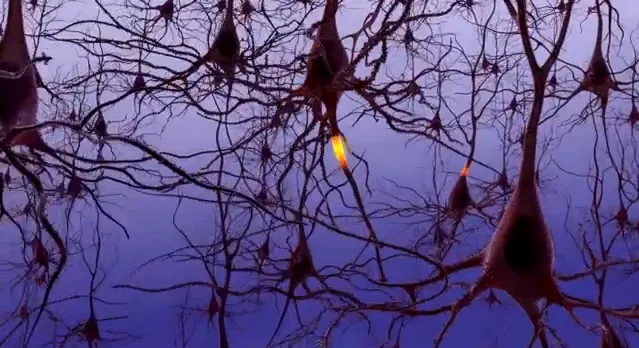
Photo: National Institute on Aging, Public domain, via Wikimedia Commons
There is a piece of advice that has circulated in American wellness culture for decades: commit to a new behavior for 21 days, and it becomes a habit. The claim is neat, memorable, and almost entirely unsupported by neuroscience. For anyone serious about understanding how the human brain actually encodes behavior — whether for personal health, clinical application, or academic study — the real story is considerably more complex, and considerably more interesting.
Where the 21-Day Myth Came From
The origin of the 21-day figure is most often traced to Maxwell Maltz, a plastic surgeon who published Psycho-Cybernetics in 1960. Maltz observed anecdotally that his patients appeared to take roughly three weeks to adjust psychologically to physical changes such as nose reshaping or limb amputation. He wrote that it requires "a minimum of about 21 days" for a mental image to dissolve — a careful qualifier that subsequent generations of motivational speakers and wellness influencers quietly dropped.
The claim spread not because it was validated by controlled research, but because it was convenient. Twenty-one days is short enough to feel achievable, long enough to sound scientific. From a physiological standpoint, however, the number carries no particular significance.
The Architecture of Habit in the Brain
To understand why habit formation cannot be reduced to a single number, it helps to examine the neural structures involved. Habits are not stored in a single region; they emerge from a coordinated dialogue between several brain systems.
The Basal Ganglia and Procedural Memory
The basal ganglia — a cluster of subcortical nuclei deep within the cerebrum — are central to the formation and execution of habitual behavior. When a behavior is new, the prefrontal cortex (PFC) governs it with considerable metabolic effort, requiring conscious attention and deliberate decision-making. As the behavior is repeated in consistent contexts, the basal ganglia gradually assume control through a process called chunking. The sequence of actions is compressed into a single neural unit that can be triggered automatically, freeing the PFC for other cognitive tasks.
This is the physiological definition of a habit: a behavior that has been sufficiently encoded in the basal ganglia that it runs with minimal prefrontal oversight. The brain, in effect, shifts the behavior from effortful cognition to efficient automaticity.
The Role of Dopamine
Dopamine is often mischaracterized in popular media as simply the "pleasure chemical." Its function in habit formation is more precise. Dopaminergic neurons in the ventral tegmental area (VTA) and substantia nigra project to the striatum — a key component of the basal ganglia — and release dopamine in response to unexpected rewards. Over time, as a behavior becomes predictable, dopamine release shifts from the moment of reward to the moment of the cue that predicts the reward. This anticipatory dopamine signal is what makes cues so powerful in driving habitual behavior, and it is a core mechanism in understanding both healthy habit formation and addictive patterns.
The Prefrontal Cortex: Architect and Gatekeeper
The PFC does not simply step aside once a habit forms. It retains a supervisory role, capable of overriding basal ganglia-driven automaticity when circumstances demand flexibility. This explains why deeply ingrained habits can be suppressed under conditions of strong conscious motivation — and why they tend to resurface under stress or cognitive load, when prefrontal resources are taxed. The interplay between these systems has significant implications for behavioral change strategies.
What the Research Actually Shows
The most frequently cited empirical study on habit formation timelines was conducted by Phillippa Lally and colleagues at University College London and published in the European Journal of Social Psychology in 2010. Participants were asked to adopt a new health-related behavior — drinking water with lunch, eating a piece of fruit each day, or taking a 15-minute walk — and to report daily on how automatic the behavior felt.
The results were striking in their variability. Habit automaticity developed over a range of 18 to 254 days, with a median of approximately 66 days. Simpler behaviors, such as drinking a glass of water with a meal, reached automaticity faster. More complex physical behaviors took substantially longer. Crucially, missing an occasional day did not significantly derail the process — a finding with meaningful implications for anyone attempting behavioral change.
Subsequent research has reinforced the conclusion that there is no universal timeline. Individual differences in neuroplasticity, baseline stress levels, sleep quality, and the degree of environmental consistency all modulate how quickly the basal ganglia encode a new behavioral routine.
The Habit Loop: Cue, Routine, Reward
Neuroscientist Ann Graybiel's work at MIT has been instrumental in characterizing the habit loop — a three-part cycle of cue, routine, and reward that structures habitual behavior at the neural level. The cue activates the habit circuit; the routine executes automatically; the reward (mediated by dopamine) reinforces the circuit for future activation.
From a practical standpoint, this architecture suggests that the stability of the cue environment is as important as the repetition of the behavior itself. Attempting to build a habit in an inconsistent or frequently disrupted environment — common in American daily life, with its variable work schedules, travel demands, and digital interruptions — places a greater burden on the prefrontal cortex and slows the transfer of control to the basal ganglia.
Neuroplasticity and Individual Variation
The brain's capacity to reorganize synaptic connections in response to experience — neuroplasticity — underlies all habit formation. However, neuroplasticity is not uniform across individuals or across the lifespan. Adolescents and young adults generally exhibit greater synaptic plasticity, which can accelerate habit encoding but also increases vulnerability to maladaptive habit formation. Aging is associated with reduced plasticity, which may extend the time required to establish new routines but also confers greater resistance to unwanted habit disruption.
Chronically elevated cortisol, a physiological marker of stress, has been shown to impair prefrontal function while simultaneously strengthening basal ganglia-driven automaticity — a combination that makes stress both an obstacle to forming beneficial new habits and a catalyst for reverting to established ones.
Evidence-Based Principles for Behavioral Change
Given what neuroscience currently understands about habit formation, several evidence-grounded principles emerge:
- Consistency of context matters more than raw repetition. Performing a behavior in the same physical and temporal context accelerates cue-routine binding in the basal ganglia.
- Simple behaviors automate faster than complex ones. Building toward complex habits through graduated behavioral steps leverages the chunking mechanism more effectively.
- Reward timing is physiologically significant. Because dopamine reinforcement is most powerful when it closely follows the behavior, immediate, tangible rewards support encoding more robustly than delayed or abstract ones.
- Expect variability, not a fixed deadline. Approaching habit formation with a realistic understanding that the process may require anywhere from several weeks to several months reduces the psychological impact of early setbacks.
The Takeaway
The 21-day habit myth endures because simplicity is appealing. But the human brain is not simple, and the processes by which it encodes behavior are shaped by individual neurobiology, environmental consistency, behavioral complexity, and the intricate chemistry of the dopamine reward system. Abandoning an arbitrary number in favor of a mechanistic understanding does not make change harder — it makes it more honest, and ultimately more sustainable. The basal ganglia do not operate on a calendar. They operate on repetition, reward, and context. Work with those systems, and the timeline will follow.