Windows to the Nervous System: What Pupil Behavior Reveals About Stress, Cognition, and Emotional Processing
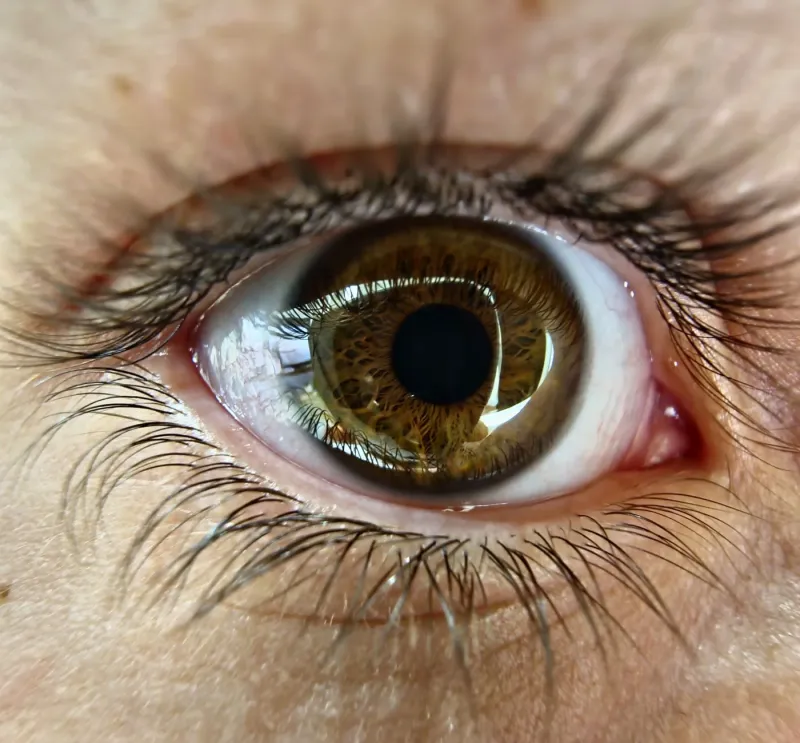
Most people understand the pupil as a simple aperture—a biological shutter that widens in dim light and narrows under bright conditions. That interpretation, while accurate, captures only a fraction of what this small circular structure actually communicates. The pupil is, in a very real physiological sense, a broadcast antenna for the autonomic nervous system, transmitting ongoing signals about arousal, attention, emotional processing, and stress that operate entirely outside conscious control.
For researchers and clinicians, pupillometry—the precise measurement of pupil diameter and its dynamic changes—has become an increasingly valuable tool for studying the nervous system non-invasively. For the rest of us, understanding what drives these involuntary fluctuations offers a more grounded appreciation of how profoundly the body monitors and responds to its internal and external environment.
The Two Systems Competing for Control
The pupil's diameter is determined by two opposing muscle groups embedded in the iris: the sphincter pupillae, which constricts the pupil, and the dilator pupillae, which enlarges it. These muscles are not under voluntary control. Instead, they respond to commands issued by the autonomic nervous system—the same regulatory network that governs heart rate, digestion, and glandular secretion.
The parasympathetic branch, operating through the oculomotor nerve (cranial nerve III), drives constriction via the sphincter pupillae. This is the response most people recognize from a routine eye exam when a clinician shines a light directly into the eye. The sympathetic branch, by contrast, activates the dilator pupillae, enlarging the pupil. Sympathetic activation occurs during states of heightened arousal, perceived threat, or significant cognitive demand.
The interplay between these two systems is continuous and dynamic. Even in a room with constant lighting, a person's pupils are rarely perfectly still. They oscillate subtly in response to shifting internal states—a phenomenon that researchers have learned to decode with considerable precision.
Stress, the Sympathetic Surge, and Mydriasis
When the brain perceives a stressor—whether a sudden loud noise, an emotionally charged conversation, or the anticipation of a difficult task—the sympathetic nervous system initiates a cascade of physiological changes. Norepinephrine is released, heart rate climbs, blood pressure rises, and the pupils dilate. This dilation, technically referred to as mydriasis, is a functional byproduct of the broader fight-or-flight response. Larger pupils allow more light to enter the eye, theoretically improving peripheral vision and threat detection in ancestral contexts.
In everyday modern life, the same mechanism activates during job interviews, public speaking, or even heated arguments. The pupils do not distinguish between a predator in the wilderness and an intimidating email from a supervisor. Any stimulus the brain codes as significant or threatening is sufficient to trigger a sympathetic response, and the pupils will reflect it.
Importantly, the magnitude and duration of this dilation can vary based on an individual's baseline autonomic tone, prior stress exposure, and current physiological state. People with chronically elevated sympathetic activity—a condition often associated with anxiety disorders or prolonged psychological stress—may exhibit baseline pupil sizes that are measurably larger than those of individuals with greater parasympathetic dominance.
Cognitive Load and the Thinking Eye
One of the more remarkable discoveries in modern pupillometry is that pupil dilation reliably tracks mental effort, even in the complete absence of emotional arousal or external stressors. Studies dating back to the work of psychologist Eckhard Hess in the 1960s, and later refined through decades of cognitive neuroscience research, have demonstrated that as mental workload increases, the pupils dilate proportionally.
Asked to perform a simple arithmetic task, a person's pupils will enlarge modestly. Presented with a more complex calculation, the dilation is more pronounced. The relationship is dose-dependent and remarkably consistent across individuals. Neuroimaging research has linked this phenomenon to the locus coeruleus, a small nucleus in the brainstem that serves as the brain's primary source of norepinephrine. When cognitive demands escalate, the locus coeruleus increases its firing rate, releasing norepinephrine broadly across the brain to support sustained attention and working memory. This same norepinephrine signal reaches the dilator pupillae, producing the observable dilation response.
This mechanism has practical implications. Researchers have used pupil dilation to assess cognitive load in pilots, surgeons, and drivers—populations where mental overload carries serious safety consequences. The pupil, it turns out, offers a continuous, objective measure of how hard the brain is working at any given moment.
Emotion, Arousal, and the Limits of Concealment
The pupil also responds to emotional content, and this response is not limited to negative or threatening stimuli. Studies have shown that pupils dilate when individuals view images or stimuli they find personally meaningful, whether those stimuli are threatening, pleasurable, or simply highly engaging. The common denominator appears to be arousal—the degree to which a stimulus activates the nervous system—rather than valence, or whether the experience is positive or negative.
This characteristic has generated considerable interest in fields ranging from marketing research to forensic psychology. Because pupil responses are involuntary and largely imperceptible to the individual experiencing them, they are considered more reliable indicators of genuine emotional engagement than self-reported measures, which are susceptible to social desirability bias and conscious manipulation.
The connection to deception is particularly nuanced. While no single physiological measure constitutes a definitive lie detector, pupil dilation has been observed during tasks requiring effortful deception, consistent with the elevated cognitive load that fabricating and maintaining a false account demands. The pupils, in this sense, may betray the mental labor of dishonesty even when the face and voice remain composed.
Pain, Pharmacology, and Clinical Relevance
Beyond stress and cognition, pupil behavior carries direct clinical significance. Pain reliably produces sympathetic activation and consequent dilation, a response that remains detectable even in patients who cannot verbally communicate their discomfort. Anesthesiologists and critical care specialists have increasingly explored pupillometry as an objective pain assessment tool in sedated or non-verbal patients.
Pharmacological agents also exert powerful effects on pupil size. Opioid medications produce pronounced constriction—miosis—by suppressing sympathetic tone and enhancing parasympathetic activity. This effect is so consistent that pinpoint pupils are considered a clinical hallmark of opioid intoxication or overdose. Conversely, stimulant drugs, anticholinergic medications, and certain antidepressants can produce significant dilation, sometimes to degrees that impair vision in brightly lit environments.
A Reflex Worth Respecting
The pupillary light reflex is among the first assessments performed in any neurological evaluation, and for good reason. Because it depends on the integrity of multiple neural pathways—including the optic nerve, the midbrain, and the oculomotor nerve—abnormalities in the reflex can localize damage with considerable anatomical precision. A sluggish or absent response on one side may indicate elevated intracranial pressure, a compressive lesion, or early herniation of brain structures, making it a critical bedside marker in emergency and neurocritical care settings.
Yet even outside the clinical environment, the pupil's behavior deserves more attention than it typically receives. In a culture increasingly focused on wearable biometrics and self-quantification, the eyes remain among the most information-dense surfaces the body presents. Every fluctuation in pupil diameter is a data point generated by the nervous system itself—a spontaneous, uncensored record of arousal, effort, and internal state that no amount of conscious composure can fully suppress.
Understanding the physiology behind these changes does not require specialized equipment. It requires only an appreciation for what the autonomic nervous system is constantly doing beneath the surface of conscious experience—and the recognition that the eyes, as the old expression suggests, are rarely as still as they appear.