Caught Sick and Inflamed at the Same Time: The Stress-Immune Paradox Your Body Didn't Warn You About
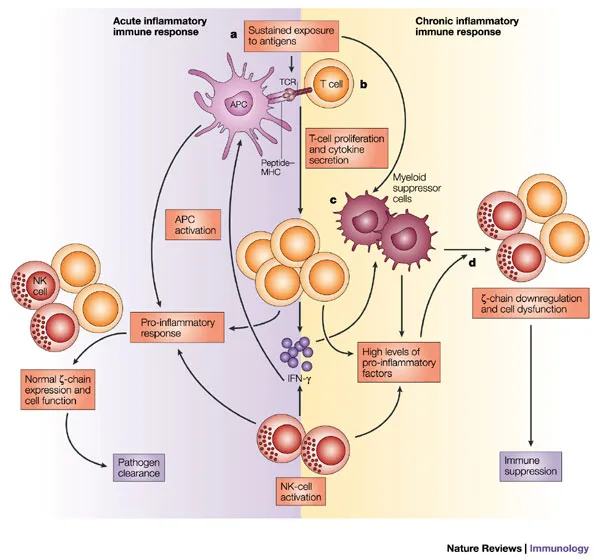
Photo: stressed person immune system inflammation biology medical concept, via s10901.pcdn.co
Most people understand stress as something that weakens the immune system. The logic seems intuitive: you push through a brutal work deadline, sleep poorly for two weeks, and then come down with a cold the moment things ease up. What this common narrative misses, however, is the other half of the story — the part where that same stressed body is simultaneously producing too much inflammation, not too little. You are, in a precise physiological sense, both immunocompromised and hyperinflamed at once.
This is the stress-immune paradox, and it has significant implications for how we understand chronic illness, autoimmune disease, and the long-term consequences of living in a state of sustained psychological pressure.
The HPA Axis: Your Stress Response Begins Here
When the brain perceives a threat — whether a swerving car on the highway or a hostile email from a supervisor — the hypothalamus initiates a hormonal cascade. It releases corticotropin-releasing hormone (CRH), which signals the pituitary gland to secrete adrenocorticotropic hormone (ACTH). ACTH then travels through the bloodstream to the adrenal glands, which sit atop the kidneys, prompting them to release cortisol.
Cortisol is often framed as the body's primary stress hormone, and in the short term, it is extraordinarily useful. It mobilizes glucose for immediate energy, suppresses non-essential functions like digestion, and — critically — modulates immune activity to prevent the body from overreacting to perceived threats. In an acute stress scenario, this system performs exactly as designed.
The problem arises when the stress is not acute. When psychological pressure becomes chronic — sustained over weeks, months, or years, as is common for millions of Americans managing financial strain, caregiving responsibilities, or high-demand occupations — the HPA axis does not simply stay activated. It begins to malfunction.
Cortisol Resistance: When the Off-Switch Breaks
Under normal conditions, cortisol exerts its anti-inflammatory effects by binding to glucocorticoid receptors on immune cells. This binding suppresses the production of pro-inflammatory signaling molecules called cytokines, keeping immune responses proportionate and controlled.
With chronic stress, however, immune cells begin to downregulate their glucocorticoid receptors. They become, in clinical terms, cortisol-resistant. The body continues producing cortisol — sometimes in dysregulated patterns, sometimes in blunted amounts — but the immune cells no longer respond to it with the same sensitivity. The anti-inflammatory brake that cortisol is supposed to apply simply stops working as efficiently.
The result is a paradox: cortisol levels may appear elevated, normal, or even low depending on the stage and severity of chronic stress, yet the immune system behaves as though cortisol is absent. Inflammatory cytokines — particularly interleukin-6 (IL-6), tumor necrosis factor-alpha (TNF-α), and interleukin-1 beta (IL-1β) — begin circulating at elevated levels. This is the hyperinflamed half of the paradox.
Suppressed Where It Counts: Adaptive Immunity Under Stress
Simultaneously, chronic stress impairs the arm of the immune system most responsible for targeted, intelligent defense: adaptive immunity. This branch includes T-lymphocytes and B-lymphocytes, cells that recognize specific pathogens, coordinate precise immune attacks, and generate immunological memory.
Chronic cortisol exposure, even when receptor sensitivity is declining, still exerts enough influence to suppress lymphocyte proliferation and reduce the production of secretory immunoglobulin A (sIgA), an antibody found in mucosal surfaces like the nasal passages and gastrointestinal tract. These are precisely the barriers that encounter pathogens first. When sIgA levels drop, the body's first line of defense against respiratory viruses and gut-based pathogens weakens considerably.
This explains why chronically stressed individuals — students during exam periods, caregivers of seriously ill family members, workers in high-burnout environments — consistently show higher rates of upper respiratory infections in epidemiological studies. Their adaptive immune systems are operating below capacity.
The Cytokine Imbalance and Its Downstream Consequences
While adaptive immunity falters, the innate immune system — the older, less specific branch responsible for general inflammatory responses — becomes dysregulated in the opposite direction. Without effective cortisol signaling to modulate it, innate immune activity can become excessive and misdirected.
Elevated circulating cytokines like IL-6 do more than cause inflammation at a local level. They cross the blood-brain barrier, alter neurotransmitter metabolism, and contribute to the neuroinflammation increasingly associated with depression, cognitive fog, and mood dysregulation. They also promote a state of systemic low-grade inflammation that has been linked in the research literature to cardiovascular disease, metabolic syndrome, and accelerated cellular aging.
For individuals with pre-existing autoimmune conditions — rheumatoid arthritis, lupus, multiple sclerosis, inflammatory bowel disease — this cytokine imbalance can precipitate or worsen flare-ups. The immune system, stripped of its cortisol-mediated regulatory checks, begins attacking self-tissue with less restraint. Clinicians frequently observe that autoimmune patients report stress as a trigger for symptomatic episodes, and the cytokine biology supports this observation directly.
The Sympathetic Nervous System's Role in the Equation
The HPA axis does not operate in isolation. The sympathetic nervous system — the fight-or-flight branch of the autonomic nervous system — activates alongside it during stress, releasing catecholamines such as epinephrine and norepinephrine. These molecules directly influence immune cell trafficking, pushing certain immune cells out of lymphoid organs and into peripheral circulation.
In the short term, this redistribution prepares the body for injury — getting immune cells to the skin and muscles where a physical wound might occur. But chronically elevated sympathetic tone keeps this redistribution active, altering where immune cells are and what they are doing. Natural killer (NK) cell activity, which is essential for identifying and destroying virally infected cells and nascent tumor cells, declines under sustained sympathetic activation. The surveillance capacity of the immune system diminishes even as its inflammatory output increases.
Why This Matters for Everyday Physiology
The stress-immune paradox is not an abstract laboratory phenomenon. It has real, measurable consequences for the American population, where chronic stress is widespread and often normalized. Survey data from the American Psychological Association consistently finds that a significant proportion of U.S. adults report stress levels they consider extreme, with work, finances, and health concerns among the leading sources.
Understanding that chronic stress produces a dual physiological burden — increased susceptibility to infection alongside heightened inflammatory activity — reframes stress management as a biological necessity rather than a lifestyle preference. Interventions that reduce HPA axis overactivation, including adequate sleep, regular moderate-intensity exercise, and evidence-based mindfulness practices, have been shown in controlled studies to restore glucocorticoid receptor sensitivity and normalize cytokine profiles over time.
The body is not simply "run down" by stress. It is reorganized by it, in ways that compromise both precision defense and inflammatory regulation simultaneously. Recognizing this distinction is the first step toward understanding why the physiological consequences of chronic stress are so far-reaching — and why addressing them requires more than a weekend of rest.
A System Designed for Sprints, Not Marathons
The HPA axis and its immune interactions evolved for acute, time-limited threats. The hormonal architecture that serves us well during a genuine emergency becomes a source of systemic dysregulation when the perceived emergency never ends. The immune system, caught between a cortisol signal it can no longer fully read and an inflammatory environment it cannot adequately suppress, operates in a state of organized confusion.
For researchers, clinicians, and anyone invested in understanding how the body sustains itself under modern conditions, the stress-immune paradox represents one of the most consequential intersections of neuroscience and immunology in contemporary physiology.