Gut Closed, Brain Open: The Emergency Triage Running Through Your Arteries
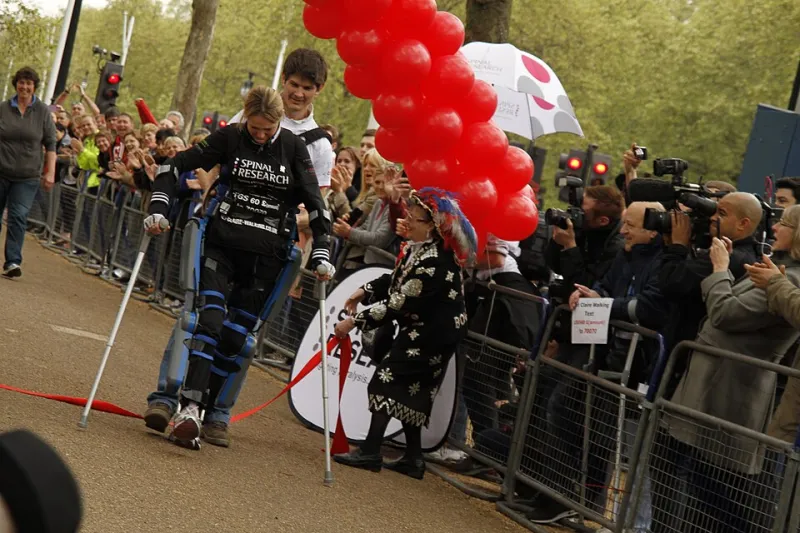
Photo: Lulu Kyriacou, CC BY-SA 3.0, via Wikimedia Commons
Picture the moment: a car drifts across the lane line on I-40, horns blare, tires lock, and in the half-second before the near miss resolves, your body has already rewritten its entire logistics map. Your heart is slamming. Your palms are damp. Your mouth is dry, your stomach knotted, your skin cold.
That last cluster of sensations is not anxiety. It is triage. Somewhere in your brainstem and hypothalamus, a command decision has been executed: blood is being pulled away from the digestive tract and redirected toward the skeletal muscles, heart, and brain. The gut, in that moment, has been formally closed for business.
A System Built on Priorities, Not Equality
The popular image of circulation — a pump pushing blood evenly through a plumbing network — is wrong in a crucial way. Blood volume is finite, cardiac output is finite, and tissue demand is not. So the vascular system operates as a rationing system, and the rationing is dynamic, moment to moment, governed largely by the autonomic nervous system.
The primary tool is the arteriole: small muscular vessels that act as adjustable faucets feeding each organ's capillary beds. Sympathetic nerves release norepinephrine onto these faucets. Depending on the receptor types a given organ expresses, the result is either constriction or dilation. This is the elegance of the design: a single chemical signal produces opposite effects in different tissues, because the receptors are wired differently.
During acute stress, arterioles serving the skin and gastrointestinal tract clamp down hard — hence cold, pale skin and a dry mouth from reduced salivation. Arterioles serving working muscle dilate. Blood is not created or destroyed; it is reassigned.
Two Emergencies, Two Very Different Maps
What makes the triage system remarkable is that it runs the same logic in opposite directions depending on what the brain perceives as the threat.
The near miss. In the acute fear scenario, the pattern is classic fight-or-flight: skeletal muscle and heart receive the lion's share of redirected output, digestion is suspended, and even the brain's fine focus narrows. Blood glucose is mobilized from the liver. The body is configured for a sprint it may need to run in the next second.
The marathon finish line. Now consider a runner crossing the line at the Chicago Marathon. The demand is not fear but sustained muscular work — and here the redistribution is even more dramatic. During maximal endurance effort, upward of 80 percent of cardiac output can be routed to skeletal muscle, while splanchnic blood flow — the blood serving the gut and liver — can fall to a fraction of its resting level. This is why runners sometimes experience nausea, cramping, or worse after hard efforts in the heat: the gut was partially ischemic during the race, and it takes time to come back online. The triage system made a cold calculation, and the gut paid for it.
Heat adds another claimant. In hot conditions, the skin demands blood flow for heat dissipation, forcing the body to juggle three competing priorities — muscle, skin, and a shrinking share for everything else. It is one reason racing in heat is physiologically brutal in ways a thermometer cannot fully capture.
Who Decides, and How
The triage hierarchy is set by integrated brain regions — the hypothalamus, the brainstem's autonomic nuclei, and higher cortical input when fear or emotion is involved — acting on real-time data from baroreceptors monitoring pressure and chemoreceptors monitoring oxygen, carbon dioxide, and pH. Local metabolites in working muscle also open vessels locally, a bottom-up signal the central system must accommodate.
The hierarchy itself is blunt but sensible: brain and heart first, always; working muscle next when movement is the task; skin when temperature regulation dominates; digestion, reproduction, and repair when resources allow. Chronic stress, some researchers argue, is what happens when the system is held in the "emergency" configuration too long — the gut, the immune system, and repair processes perpetually at the back of the rationing line.
Reading Your Own Triage
The practical insight is that sensations like a nervous stomach, cold hands before a presentation, or post-meal drowsiness after a workout are not random. They are legible outputs of a distribution system with a strict order of operations. Eat too close to hard exercise and you are asking a closed restaurant to serve a meal. Stay in sympathetic overdrive for months and the organs at the bottom of the list quietly accumulate a deficit.
Blood follows a schedule. Knowing who gets served first — and why — turns a handful of everyday sensations into a readable map of what your body thinks is happening.