The Brain That Predicts Your Own Hand: Inside the Strange Science of Self-Tickling
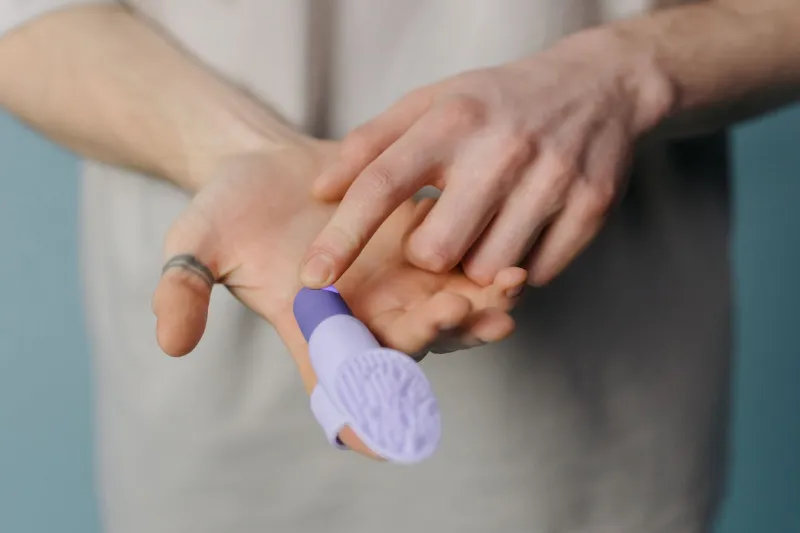
Try it right now. Take your fingers and tickle the palm of your own hand. Nothing. A faint sensation of pressure, perhaps, but none of the electric, laughing-out-loud urgency that comes when someone else does the same thing. The failure is total, and it is universal — across cultures, across ages, across species that play.
This everyday dead end turns out to be one of the most revealing experiments you can perform on your own nervous system, because it demonstrates something profound: your brain does not passively receive sensation. It predicts it. And tickling, it seems, lives entirely in the gap between prediction and reality.
The Cerebellum as the Body's Forecasting Engine
Tucked at the back of the skull, below the wrinkled cortex most people picture when they think 'brain,' sits the cerebellum — a structure packed with more neurons than the rest of the brain combined. Its classic job list includes coordinating movement and fine-tuning motor timing. But its deeper function, neuroscientists now argue, is prediction.
Whenever your brain issues a motor command — reach for a cup, scratch an itch — a copy of that command, called an efference copy, is routed to the cerebellum. There, the brain calculates the sensory consequences of the action before they occur: what the hand will feel, what the skin will register, how the joints will move. This forward model lets you distinguish the world acting on you from you acting on the world.
The consequences are everywhere. You cannot surprise yourself with your own touch because the forecast arrives before the sensation. People with cerebellar damage, whose forward models are impaired, sometimes can tickle themselves — their brains no longer issue an accurate preview, so their own touch retains an element of the unexpected. The tickle response, in other words, is not a property of the skin. It is a property of unpredictability.
Why Unpredictability Is the Point
Tickling is odd among sensations. It produces laughter, yet most people do not describe the experience as purely pleasant. It requires another person — you cannot do it to yourself — and it fades with repetition. A leading theory, advanced by researchers including Sarah-Jayne Blakemore and colleagues in influential work at University College London, holds that tickling is fundamentally a social signal, one that depends on the element of surprise precisely because surprise implies another agent.
From an evolutionary standpoint, that logic is tidy. A reflex that makes you squirm and laugh at unpredictable touch would have helped our ancestors practice defending vulnerable areas — the ribs, the neck, the armpits — and reinforced social bonding through play. The nervous system flags unpredicted touch as significant, as possibly caused by something external. Your own hand, perfectly predicted, is dismissed before the sensation even arrives.
Brain imaging supports this account. When people attempt to tickle themselves, activity in the somatosensory cortex is reduced compared with the same touch applied externally. The prediction does not merely coexist with the sensation — it actively dampens it.
When the Prediction Machine Misfires
The same machinery that silences self-touch explains some stranger phenomena when it fails. Patients with schizophrenia, who may experience their own thoughts and actions as originating from outside themselves, show reduced ability to dampen self-generated sensations — some can tickle themselves, suggesting their efference copy system is not cleanly tagging their own actions as 'self.' The inability to distinguish self from other at this basic sensory level may be connected to deeper disturbances of agency.
At the other end of the spectrum, phantom limb pain may involve the opposite problem: a forward model of the body that persists after the body part is gone, generating predictions and sensations for a limb that no longer exists. In both cases, the lesson is the same. The brain's model of the body is constructed, maintained, and constantly revised — and when the model and reality diverge, experience itself bends.
Consciousness by Comparison
Zoom out, and the humble tickle becomes a doorway to one of the biggest questions in neuroscience. The dominant framework, often called predictive processing, proposes that perception itself works this way: the brain generates a continuous model of the world and its own body, then updates that model only when sensory input violates expectations. What you consciously experience is not raw input but the brain's best current guess, corrected by prediction errors.
Under this view, your inability to tickle yourself is a small demonstration of an enormous principle. You never experience the world directly. You experience your model of it — and the model is so good, so fast, and so quietly confident that you mistake it for reality. The tickle that vanishes under your own fingers is the model at work, editing out the parts of the world it already knows.
There is something almost philosophical in the realization. The self that reaches out to tickle and the self that would receive the tickle are, from the brain's perspective, the same prediction system on both sides of the transaction. The joke, in the end, is on no one — because the brain already told itself how it would end.