Life Without Gravity: What Astronauts' Failing Bodies Teach Us About the Fight You Never Feel
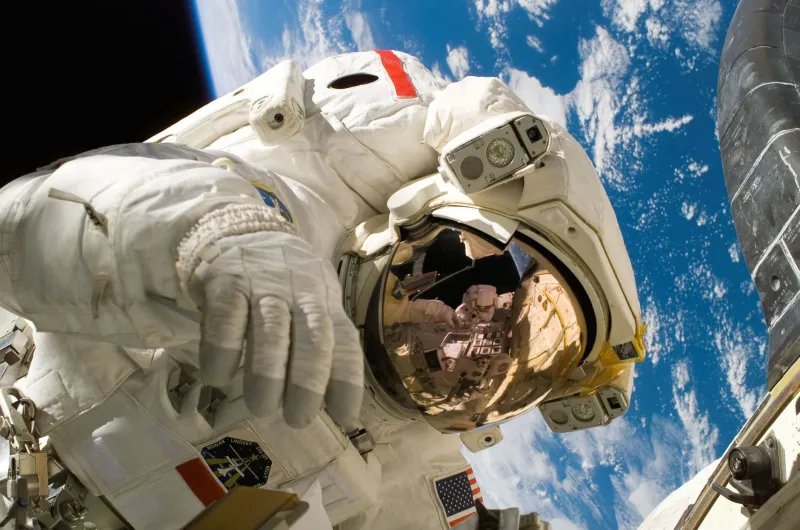
For most of human history, gravity was simply the backdrop of existence — the invisible constant that no one thought to question. It took sending men and women into orbit for scientists to appreciate something remarkable: the human body is not a passive structure that happens to exist on Earth. It is an active machine, continuously contending with gravitational load, and the moment that load disappears, nearly every system begins to unravel.
The data coming out of the International Space Station is, in places, alarming. Bone density loss in astronauts can proceed at roughly 1% per month in weight-bearing regions such as the hip and spine — a rate that would take a postmenopausal woman with osteoporosis years to match. Within months of arriving in microgravity, crew members become, in effect, accelerated patients with a disease we usually associate with aging.
The Skeleton as a Sensor
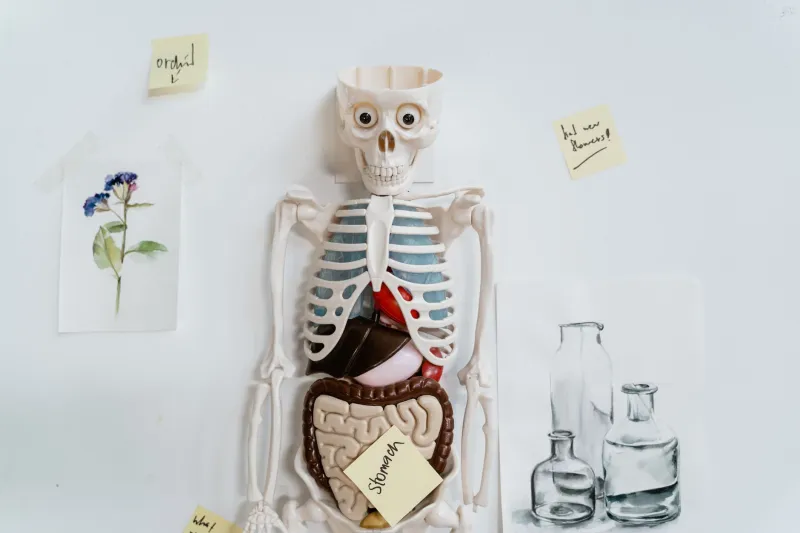
Bone is often imagined as inert scaffolding, but it is living tissue engaged in a perpetual renovation project. Cells called osteoblasts build new matrix; cells called osteoclasts demolish old material. What tips the balance between them is largely mechanical. Loaded bone — bone that bears weight, absorbs impact, resists bending — signals to osteoblasts to reinforce it. Unloaded bone is interpreted as unnecessary, and demolition crews move in.
On Earth, simply standing forces your skeleton to carry your entire body mass. Walking multiplies that load several-fold; running, more still. In orbit, astronauts float. The skeleton receives no such signal, and the remodeling machinery quietly shifts toward resorption. Calcium leached from bone does not vanish — it enters the bloodstream and is excreted in urine, which is one reason astronauts face elevated kidney stone risk during missions.
Countermeasures exist. Resistance exercise devices aboard the ISS, including the ARED machine, use vacuum cylinders to simulate weightlifting, and astronauts commit roughly two hours daily to exercise. Even so, full recovery of lost bone after return to Earth can take years, and some deficits may never fully reverse.
Fluids Drift Upward — and the Body Panics
On the ground, gravity pulls your blood and interstitial fluid toward your feet, and your cardiovascular system works against this gradient every moment. Leg muscles act as a secondary pump, and one-way valves in the veins prevent backflow. Remove gravity, and this elegant architecture becomes pointless.
Within hours of reaching orbit, body fluids redistribute toward the head. Astronauts develop puffy faces and congested sinuses — the 'puffy head, bird legs' phenomenon familiar from space station video calls. The cardiovascular system, sensing more central blood volume, misinterprets the situation as fluid overload and responds by increasing urination and reducing thirst. Blood volume falls.
The trouble arrives on the trip home. When astronauts stand again after months aloft, their reduced blood volume and blunted baroreflex responses can cause profound orthostatic intolerance — lightheadedness or fainting on simply standing up. For returning crew members, walking out of the capsule is not a photo opportunity; it is a physiological gauntlet.
There is also a vascular puzzle that has only recently drawn serious attention: many long-duration astronauts develop measurable changes in eye structure and vision, a syndrome NASA calls Spaceflight-Associated Neuro-ocular Syndrome, or SANS. The leading hypothesis involves altered fluid pressures around the optic nerve and the back of the eye — another casualty of a circulatory system designed for a downward pull that no longer exists.
Muscle: Use It or Lose It, Fast
Skeletal muscle obeys the same logic as bone. Postural muscles — the calves, quadriceps, and back extensors that keep you vertical — atrophy quickly without load. Studies of ISS crews show significant declines in muscle volume and strength despite rigorous countermeasure programs. The slow-twitch, fatigue-resistant fibers that support standing take a particular hit, shifting the muscle's fiber composition toward faster, more fatigable phenotypes.
This matters for the one in three American adults who meet the formal definition of sarcopenia risk through inactivity. Bed rest studies, conducted on Earth as a proxy for spaceflight, show that healthy volunteers confined to bed lose measurable muscle and bone within weeks. Hospitalization, injury, and a sedentary desk job are, physiologically speaking, partial versions of the same experiment.
The Brain in a New Frame
Microgravity also disturbs the brain's model of the body. The vestibular system — the inner ear organs that detect head orientation and acceleration — relies on otoliths, tiny dense crystals whose weight-dependent deflection tells the brain which way is down. In orbit, that signal vanishes. Astronauts frequently experience space motion sickness during their first days aloft as vision and proprioception scramble to compensate for the missing graviceptor.
Structural brain imaging of long-duration crew members has documented upward shifts of the brain within the skull and changes in the spaces surrounding it — subtle, but a reminder that even the brain's physical position is a negotiation with gravity.
Why Earthbound Bodies Should Care
The value of space physiology is not merely that it prepares us for Mars missions. It functions as a control experiment on daily life. Every mechanism that fails in orbit — mechanical signaling in bone, the muscle pump, venous return, baroreflex sensitivity — is a mechanism your body deploys continuously, and one that modern sedentary living quietly underuses.
The prescription that emerges is almost disappointingly simple: stand, walk, lift, and let your skeleton know it is needed. Weight-bearing exercise remains the most evidence-supported intervention for preserving bone density, and muscle loading protects both. The astronauts floating 250 miles overhead, tethered to their exercise machines, are performing the same essential work you do every time you climb a flight of stairs — they just have to do it artificially.
Gravity, it turns out, is not a tax at all. It is a subsidy, paid out to every organism that loads its tissues against it. The body's decline in space is the clearest possible receipt for what you receive free of charge, every day, on Earth.