Ninety-Eight Point Six and Other Comfortable Lies: What Your Body Temperature Is Actually Telling You
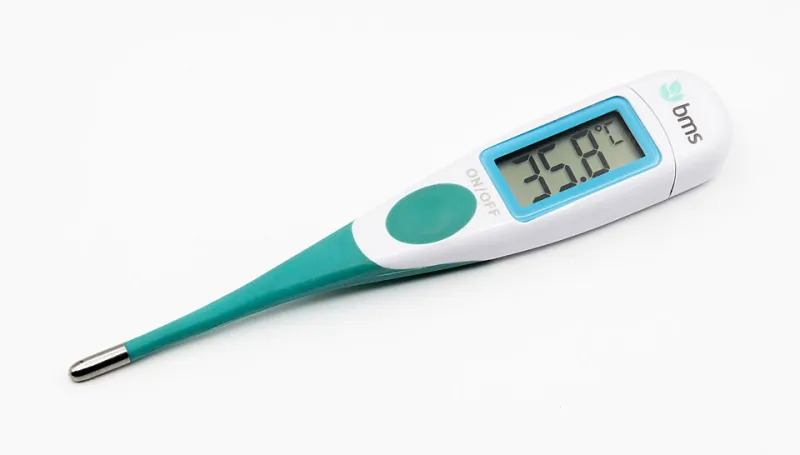
Photo: Jacek Halicki, CC BY-SA 4.0, via Wikimedia Commons
In 1868, a German physician named Carl Wunderlich published the results of an obsessive project: he had recorded axillary temperatures from roughly 25,000 patients, millions of measurements taken with a thermometer that had to sit in the armpit for fifteen minutes. From this mountain of data came the number that would haunt medicine for a century and a half — 98.6°F as the human standard.
There is just one problem. Wunderlich's number was an average of a 19th-century population, converted from Celsius with cheerful imprecision (37°C is actually 98.6°F only because the conversion was rounded), measured in a way no modern clinician would replicate. And the population itself has changed.
The Shrinking Fever
In recent years, researchers revisiting large datasets — including Civil War-era military records, the National Health and Nutrition Examination Survey, and the Stanford Translational Research Database — found something striking: average body temperature in the United States has been declining by roughly 0.05°F per birth decade. Men born in the 2000s run about a full degree cooler than men born in the 1800s. A modern American's "normal" is closer to 97.5–98.2°F, not 98.6.
The explanations are contested but plausible: the chronic, low-grade inflammation that infected 19th-century lives is largely gone; metabolic rates have shifted; household climate control has reduced thermogenic demands. Whatever the mix of causes, the conclusion holds — the reference number itself was a snapshot of a different population, in a different metabolic era.
Your Temperature Is a Wave, Not a Number
Even for a single person, there is no fixed normal. Body temperature follows a robust circadian rhythm, bottoming out in the early morning hours and peaking in the late afternoon and early evening — a swing that can span a full degree Fahrenheit in the same healthy person on the same healthy day. Women of reproductive age add another layer: body temperature rises by roughly half a degree after ovulation, driven by progesterone, and remains elevated until menstruation. Basal body temperature charting exploits precisely this shift.
Measurement site muddies the picture further. Rectal temperatures run highest, oral readings a bit lower, forehead and ear readings lower still and more vulnerable to error. A 99.5°F forehead reading in the evening might be entirely unremarkable; the same number rectally at 6 a.m. would raise an eyebrow.
So When Does a Number Matter?
Strip away the myth of the magic number and replace it with a more useful framework — one built on deviation, direction, and context.
Deviation from your own baseline. If you know your typical morning oral temperature, a departure of a degree or more from that personal baseline carries more information than any population average.
Direction and magnitude. Clinically, fever is generally defined as 100.4°F (38°C) or above, regardless of what "normal" is. Hypothermia becomes a concern below 95°F (35°C). Between those poles lies an enormous gray zone where the number alone tells you almost nothing.
Context and trajectory. A temperature of 99.8°F in a person with chills, body aches, and a sick contact at home is meaningful. The same number in a person who just finished a hot yoga class, or who is ovulating, or who drank a hot coffee twenty minutes ago, is noise. Trend matters more than snapshot: a temperature climbing steadily through the evening warrants more attention than one sitting slightly high and stable.
The person, not the thermometer. Infants under three months with any fever, elderly adults whose infections may present with lowered temperature rather than fever, and anyone with altered mental status, rigors, or respiratory symptoms — these are situations where clinical judgment outranks the reading entirely.
Retiring the Magic Number
Wunderlich gave medicine a useful starting point and an unfortunate legacy of false precision. The modern view is humbler: body temperature is a moving, individually variable signal shaped by time of day, hormones, age, measurement site, and a century of environmental change.
The practical takeaway for anyone keeping a thermometer in the medicine cabinet: know your own baseline, measure consistently at the same site and time of day, and treat sustained deviations — not single readings — as the signal worth acting on. Your body was never a fixed number. It is a dynamic system, and the most important thing a temperature reading can tell you is not where you stand against 1868, but how you compare to yourself.