The Battery You Never Charge: How Sodium and Potassium Power Every Thought and Step You Take
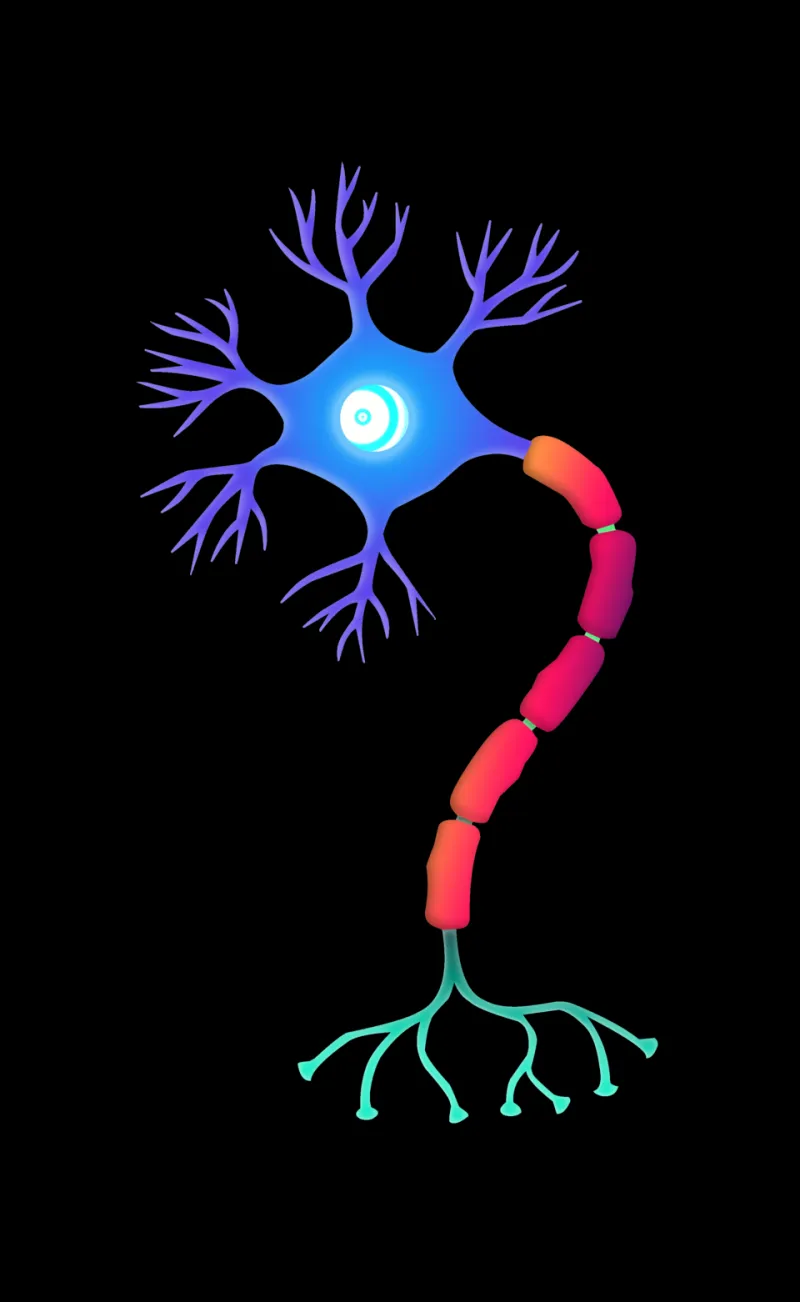
Photo: Yourazidan, CC BY-SA 4.0, via Wikimedia Commons
Somewhere in your body right now, trillions of molecular machines are performing the same thankless task: grabbing three sodium ions, tossing them out of a cell, and hauling two potassium ions back in. Each cycle costs a molecule of ATP. Each cycle matters. Without this constant exchange—the sodium-potassium pump—your neurons would fall silent within moments, your heart would stop mid-beat, and the entire project of being you would collapse.
The pump rarely gets the attention it deserves, yet it consumes a substantial share of your resting energy budget. In neurons, estimates suggest it can account for a large fraction of total ATP consumption. Understanding it is not just an academic exercise; it is the key to seeing through a great deal of hydration marketing.
The Gradient Is the Message
Nerve cells are, in a sense, batteries. The pump works relentlessly to maintain a steep concentration difference: sodium sits high outside the cell, potassium high inside. This imbalance, paired with the selective leak of potassium back out through dedicated channels, generates a voltage across the membrane of roughly −70 millivolts in a typical neuron.
That voltage is not a byproduct. It is the currency of the nervous system. When a neuron fires, voltage-gated sodium channels snap open, and sodium rushes inward down its concentration gradient, reversing the membrane potential in a fraction of a millisecond. That reversal—the action potential—is the signal. It travels down axons, triggers neurotransmitter release, and ultimately becomes a thought, a sensation, or a command to move.
Notice what this implies: the nervous system does not run on sodium as a fuel. It runs on the gradient of sodium, a form of stored electrical potential that the pump must continuously rebuild. Firing the neuron spends the gradient; the pump refills the account. Potassium, meanwhile, is what allows the cell to reset, flowing outward to restore the resting voltage after the sodium flood.
Why Muscles Care Just as Much
The same logic governs contraction. An action potential arriving at a muscle fiber initiates a cascade that ends with actin and myosin sliding past one another. But repeated firing depletes the gradients, and as intracellular sodium creeps up and potassium accumulates in the narrow space outside the muscle membrane, fibers become progressively less excitable. This is one contributor to the fatigue you feel late in a hard effort—not a lack of fuel, but a weakening of the electrical infrastructure.
This is also where sweat enters the picture. Sweat glands reabsorb sodium as fluid passes through them, and with training and heat acclimatization, they become notably better at it. A well-adapted athlete's sweat is measurably saltier-lean than a sedentary person's. The body, in other words, actively defends its sodium when given the chance.
The Sports Drink Problem
None of this supports the assumption baked into American beverage aisles: that a forty-five-minute gym session creates a sodium crisis requiring commercial intervention.
The numbers rarely cooperate with the marketing. A liter of sweat contains roughly 900 milligrams of sodium at moderate concentrations—considerably less in adapted sweaters. Most casual workouts produce perhaps half a liter to a liter of sweat. Meanwhile, a single fast-food meal can contain well over a full day's recommended sodium intake, and the average American diet delivers substantially more sodium than physiologists would call necessary. The typical exerciser finishing a typical workout is not on the verge of hyponatremia; if anything, the population-wide problem runs in the opposite direction, with excess dietary sodium contributing to hypertension in salt-sensitive individuals.
Genuine sodium depletion is real, but it belongs to a specific context: hours of continuous sweating in heat, repeated sessions with aggressive fluid replacement by plain water, or prolonged exertion in extreme conditions. Ultramarathon runners, outdoor construction crews in August, and military recruits in hot climates face legitimate electrolyte challenges. Your Tuesday spin class does not.
There is also a quieter irony worth naming. The body's own machinery already prioritizes sodium conservation, and drinking an electrolyte beverage does not deliver sodium to your neurons in any special way—everything passes through the digestive system and the bloodstream like any other food. The pump does not care about branding.
What Actually Deserves Attention
If there is a practical takeaway, it is this: for ordinary exercise lasting under about an hour, water and a normal diet are sufficient. For longer or hotter efforts, replacing sodium alongside fluid is sensible, and the amounts should scale with actual sweat losses, not with the serving size printed on a bottle.
The deeper lesson is more interesting than any hydration rule. Every flicker of cognition, every deliberate movement, every reflex you never chose to have depends on an electrochemical gradient that must be endlessly maintained at metabolic cost. The sodium-potassium pump is the quiet accountant behind the whole enterprise—unglamorous, relentless, and far more deserving of the word "essential" than anything sold in a colorful squeeze bottle.