Between Every Heartbeat: The Vagus Nerve, Autonomic Recovery, and What Heart Rate Variability Actually Tells You
Most people glance at their resting heart rate and conclude something meaningful about their fitness. It is a reasonable instinct—lower resting rates have long been associated with cardiovascular conditioning, and elite endurance athletes often record values well below 50 beats per minute. But resting heart rate, as a solitary metric, tells an incomplete story. It measures the average, not the texture. And in physiology, the texture is frequently where the real information lives.
Heart rate variability—the millisecond-level fluctuation in time between successive heartbeats—has emerged as one of the most informative windows into autonomic nervous system function currently available without invasive measurement. Understanding why requires a brief but essential detour into the architecture of the system governing it.
The Autonomic Nervous System and Its Two Competing Voices
The autonomic nervous system operates as the body's largely unconscious regulatory infrastructure, modulating everything from digestion to immune response to cardiovascular output. It is organized into two primary branches: the sympathetic division, which mobilizes physiological resources in response to perceived demand or threat, and the parasympathetic division, which governs restoration, repair, and conservation of energy.
These two systems are not simply on/off switches. They exist in a continuous, dynamic tension—a physiological negotiation conducted in real time. The ratio of their relative influence at any given moment determines a staggering range of biological outcomes, from blood pressure regulation to inflammatory signaling to cognitive clarity.
The vagus nerve—the tenth cranial nerve and the primary conduit of parasympathetic outflow—plays a central role in this balance. Running from the brainstem through the thorax and into the abdomen, it innervates the heart, lungs, and much of the gastrointestinal tract. Its cardiac branch exerts a direct inhibitory effect on the sinoatrial node, the heart's natural pacemaker, essentially applying a continuous parasympathetic brake that slows heart rate below its intrinsic firing frequency of roughly 100 beats per minute.
This braking action is not applied uniformly. It fluctuates with each breath, with hormonal shifts, with cognitive load, with sleep stage, and with accumulated physiological stress. Those fluctuations are precisely what heart rate variability captures.
Why Variability Signals Resilience, Not Instability
The intuitive assumption is that a more consistent heartbeat would indicate better cardiovascular health. In reality, the opposite is true. A highly regular, metronomic heart rate—one with minimal variability—suggests a nervous system operating with reduced adaptive capacity. The heart is essentially locked into a rigid rhythm, unable to respond fluidly to moment-to-moment physiological demands.
High HRV, by contrast, reflects a system that is responsive and well-regulated. The vagus nerve is actively and dynamically modulating cardiac output, which indicates robust parasympathetic tone. In this state, the body is better positioned to transition between effort and recovery, to mount appropriate immune responses, and to maintain cognitive and emotional regulation.
This is why elite athletes—particularly those in endurance sports—place considerable emphasis on daily HRV tracking. A sustained decline in HRV across successive mornings often precedes overtraining syndrome by days, providing an early warning that the nervous system has not adequately recovered even when subjective fatigue has not yet registered consciously. In this context, HRV functions as a leading indicator rather than a lagging one.
How Chronic Stress Erodes Variability at the Cellular Level
The mechanisms through which chronic psychological and physiological stress suppress HRV are well-characterized. Sustained activation of the hypothalamic-pituitary-adrenal axis elevates circulating cortisol, which over time reduces parasympathetic tone by diminishing vagal outflow. Simultaneously, chronic sympathetic dominance increases norepinephrine release at cardiac synapses, accelerating sinoatrial node firing and compressing the variability window.
At the cellular level, prolonged stress also appears to impair the sensitivity of muscarinic acetylcholine receptors on cardiac tissue—the receptors through which vagal signaling exerts its slowing effect. When these receptors are downregulated or desensitized, the heart becomes less responsive to parasympathetic input even when vagal activity is nominally present. The result is a structural reduction in HRV that persists beyond the acute stress period.
This helps explain why individuals experiencing chronic work stress, sleep deprivation, or unresolved psychological strain consistently record lower HRV values independent of their physical fitness level. The nervous system does not distinguish cleanly between sources of allostatic load. Training stress, occupational pressure, and interpersonal conflict all draw from the same physiological reserve.
What Consumer Wearables Actually Measure—and Where They Fall Short
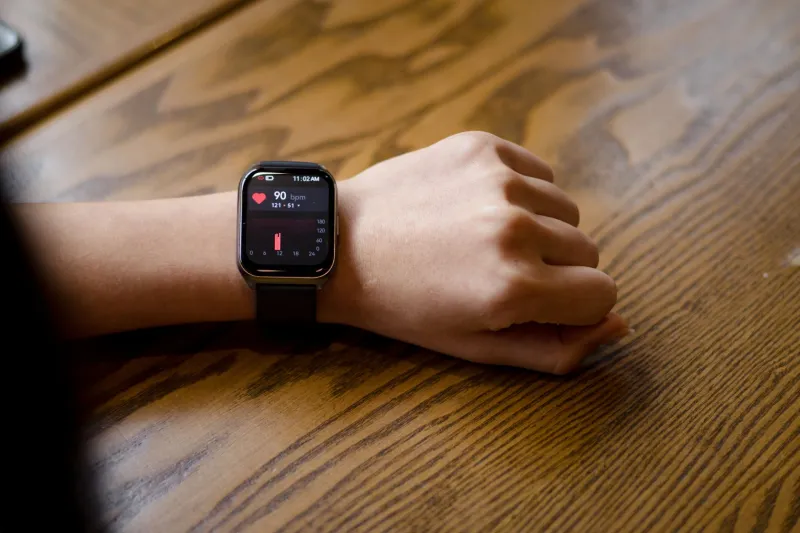
The proliferation of HRV-capable fitness trackers has democratized access to a metric that was, until recently, confined to research laboratories and elite sports medicine programs. Devices from companies including Garmin, Apple, Whoop, and Oura now generate HRV estimates and present them through proprietary recovery or readiness scores. For many Americans using these products, the numbers have become a daily reference point for training decisions.
The limitations of this technology deserve honest examination. Clinical-grade HRV measurement relies on electrocardiography, which captures the precise electrical signal of each cardiac cycle. Most consumer wearables use photoplethysmography—optical sensors that detect blood volume changes in peripheral tissue—to infer interbeat intervals. This approach introduces measurement noise, particularly during movement, and the accuracy of the resulting HRV estimates varies considerably across devices and individuals.
Equally significant is the question of timing and context. HRV is highly sensitive to posture, recent food intake, alcohol consumption, ambient temperature, and the specific sleep stage from which a user wakes. Many consumer devices capture a brief measurement window in the morning or during a single sleep phase and present the result as a comprehensive recovery index. The physiological reality is considerably more nuanced.
This does not render consumer HRV data useless—longitudinal trends observed within the same individual, using the same device and measurement protocol, carry genuine informational value. The problem arises when single-day readings are treated as precise physiological diagnoses or when proprietary algorithms obscure the underlying data in ways that prevent informed interpretation.
Can You Actually Train Your Vagal Tone?
The question of whether specific behavioral interventions can meaningfully and durably increase parasympathetic tone—and thereby improve HRV—has attracted substantial research attention. Several techniques have demonstrated statistically significant effects in controlled studies, though the magnitude and longevity of these effects vary.
Slow, diaphragmatic breathing at a rate of approximately five to six cycles per minute has the most consistent evidence base. This respiratory pattern, sometimes called resonance frequency breathing, synchronizes breathing cycles with the natural oscillation of cardiovascular autonomic control, amplifying vagal influence on the sinoatrial node. Acute HRV increases during this practice are well-documented; evidence for sustained resting improvements with regular practice is more modest but present.
Aerobic exercise training remains the most robustly supported long-term intervention. Endurance-trained individuals consistently demonstrate higher resting HRV than sedentary counterparts, and longitudinal training studies show measurable increases in parasympathetic indices following sustained aerobic conditioning programs.
Cold water exposure, meditation, and transcutaneous vagus nerve stimulation devices have each appeared in the broader HRV literature with varying degrees of methodological rigor. Some findings are promising; others reflect small samples, short durations, or inadequate controls. The consumer wellness industry has been considerably more enthusiastic about these modalities than the peer-reviewed evidence strictly warrants.
Reading the Signal Honestly
Heart rate variability is not a number to be optimized in isolation. It is a physiological signal—one that reflects the integrated state of your nervous system across all the demands, stressors, and recovery inputs of your life. Treating it as a performance score to be gamified misses the point, and possibly the science.
What HRV genuinely offers, when measured carefully and interpreted in context, is something relatively rare in self-monitoring: a direct, real-time indication of how your autonomic nervous system is balancing competing physiological priorities. For a system as consequential as the one governing your heart, your immune response, and your capacity to adapt to stress, that kind of transparency is worth taking seriously—even if the technology delivering it still has some catching up to do.