Five Conversations Your Skeleton Is Having Without You
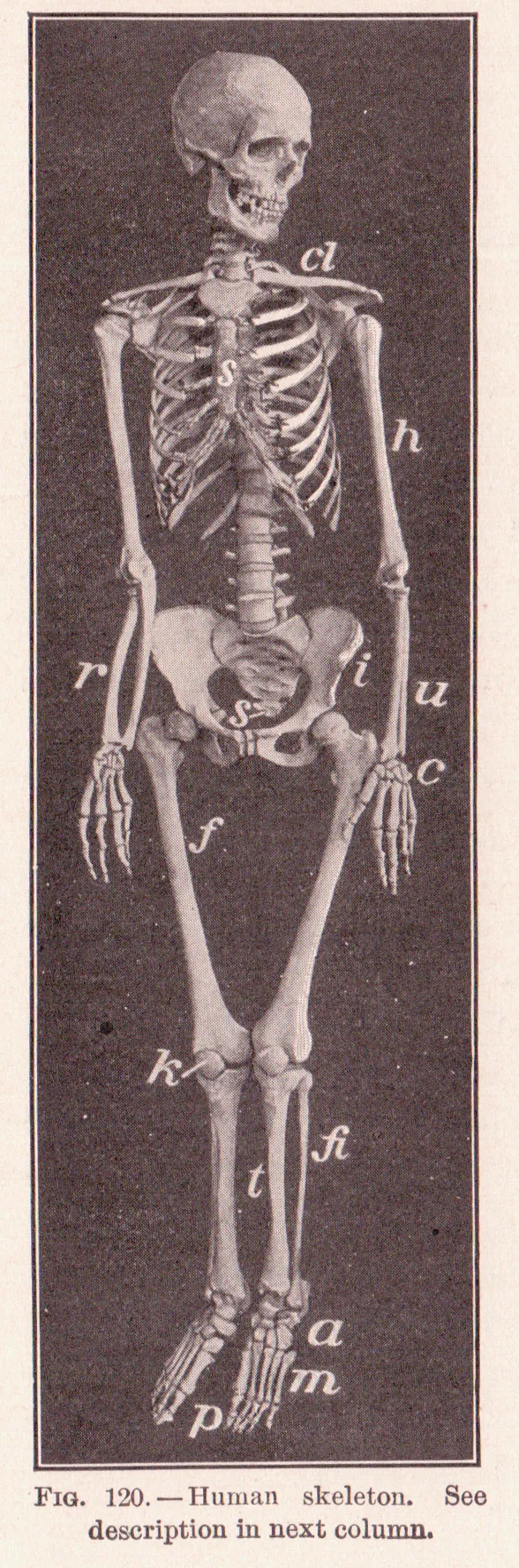
Photo: Sue Clark, Public domain, via Wikimedia Commons
The skeleton has a public relations problem. Ask anyone what bones do and you will hear about structure: the frame, the armor, the calcium warehouse. All true, and all incomplete. Since the discovery that bone cells secrete hormones with body-wide effects, the field has been quietly rewriting the job description. Bone is not the building. Bone is a talking organ that happens to hold the building up.
Below are five of the most consequential conversations your skeleton is currently conducting—mostly without your knowledge, and increasingly without your participation.
1. Talking to Your Pancreas About Blood Sugar
The hormone osteocalcin, produced by bone-forming cells called osteoblasts, does something remarkable: it stimulates insulin secretion from the pancreas and improves insulin sensitivity in peripheral tissue. In mice, the effect is dramatic—skeleton-derived osteocalcin meaningfully influences glucose handling. Human evidence is more nuanced, with genetics and confounders complicating the picture, but the direction of the research is clear. Bone is a participant in metabolic regulation, not a bystander. The unglamorous corollary: the health of your skeleton and the health of your metabolism are entangled in ways no one suspected when osteoporosis and diabetes were filed in separate departments.
2. Talking to Your Brain About Fertility and Cognition
Osteocalcin crosses into the bloodstream and reaches the brain, where it influences neurons involved in reproduction, memory, and mood. Animal studies link bone-derived signals to hippocampal function and to the regulation of testosterone synthesis. The evolutionary logic is provocative: an animal preparing to reproduce needs a skeleton robust enough to support the endeavor, and a skeleton that senses plenty can signal back that the moment is ripe. Your bones, in effect, hold a vote in whether your body commits resources to reproduction and cognition.
3. Talking to Your Muscles in Both Directions
Muscle and bone form a genuine feedback loop. Contracting muscle releases signaling molecules—myokines—that influence bone remodeling, while bone-derived factors feed back into muscle metabolism and repair. This is why the two tissues so often decline together in aging, and why interventions aimed at one tend to help the other. The mechanical signal is the switch: load the tissue, and the conversation continues. Remove the load, and it goes quiet.
4. Talking to Your Kidneys and Gut About Minerals
Bone is the body's mineral reservoir, but the reservoir has opinions. Through osteocalcin and phosphate-regulating hormones such as FGF23, bone participates in managing phosphate excretion and, indirectly, the vitamin D economy connecting gut, kidney, and skeleton. Calcium is not merely stored in bone; it is negotiated with bone, under hormonal terms that involve every organ system touching mineral balance.
5. Listening—Or Failing to Listen—To Gravity
Here is the mechanism that ties the list together. Osteocytes, the mechanosensing cells entombed in mineralized matrix, detect the strains produced by weight-bearing movement and adjust remodeling accordingly. Load signals bone to stay dense, stay active, and keep talking. Unload it, and bone resorption accelerates—a fact demonstrated with painful clarity in astronauts, who can lose a notable fraction of bone mineral density on long missions despite rigorous countermeasures.
Modern sedentary life is a milder version of the same experiment. Desk-bound days, car commutes, and elevator defaults constitute a partial unloading, and the skeleton responds rationally: it down-regulates. The endocrine conversations described above are load-dependent. A skeleton that is never asked to bear weight has correspondingly less reason to secrete, signal, or invest.
What the Conversation Requires From You
The practical prescription is almost embarrassingly simple. Weight-bearing exercise—walking, resistance training, stair climbing, anything that transmits real force through the skeleton—provides the mechanical signal that keeps osteocytes engaged and remodeling balanced. Progressive resistance training in particular has documented effects on bone mineral density and, via the pathways above, plausibly on the broader metabolic and neural conversations bone participates in.
The reframing matters more than the routine, though. You are not maintaining a scaffold. You are keeping an endocrine organ employed—an organ that, when treated as a passive frame, stops doing the metabolic, reproductive, and cognitive work that twenty years of research now says it does. The skeleton has been talking all along. Weight-bearing movement is how you stay part of the conversation.