Timing Is Everything: The Circadian Biology Behind When You Should Train
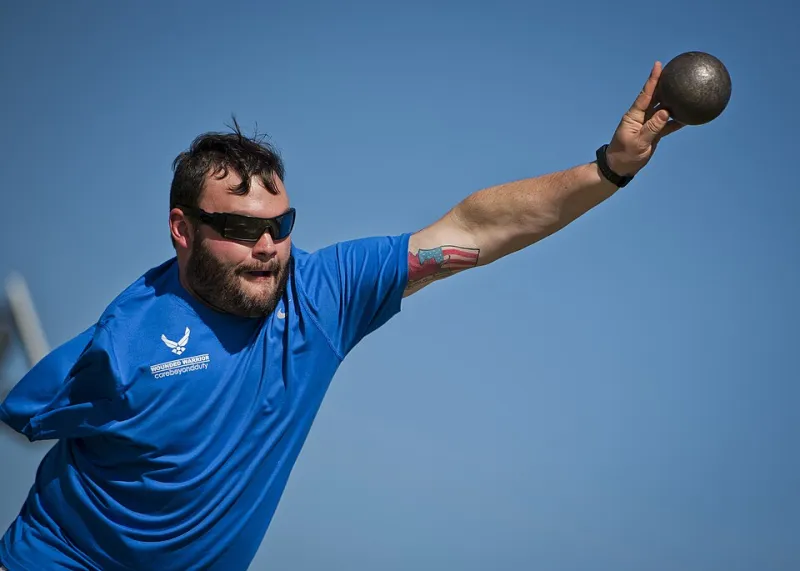
Photo: Samuel King Jr., Public domain, via Wikimedia Commons
Most Americans who exercise regularly choose their workout time based on convenience — an early slot before the commute, a lunch break run, or an evening session after the kids are in bed. What very few consider is that the body itself has a strong opinion about when physical effort should occur. That opinion is encoded in a sophisticated timekeeping system known as the circadian clock, and its influence on athletic performance is far more profound than most fitness culture acknowledges.
What the Circadian Clock Actually Controls
The master circadian pacemaker resides in a tiny region of the hypothalamus called the suprachiasmatic nucleus (SCN). Synchronized primarily by light exposure, the SCN broadcasts timing signals throughout the body via hormonal cascades and neural pathways, coordinating processes in virtually every organ system. Muscle tissue, the liver, the adrenal glands, and the cardiovascular system each maintain their own peripheral clocks that respond to these central cues.
From a physiological standpoint, the circadian system regulates core body temperature, cortisol secretion, testosterone and growth hormone release, cardiovascular output, and the efficiency of glucose metabolism — all variables that bear directly on exercise performance. None of these processes are static across a 24-hour period. Each follows a distinct daily arc, and the timing of those arcs has meaningful implications for anyone serious about physical training.
The Morning Workout: What the Biology Actually Shows
Exercising early in the morning carries enormous cultural cachet in the United States. The 5 AM gym session is practically a symbol of discipline. Physiologically, however, the early morning represents something closer to a suboptimal window for peak performance, particularly for high-intensity efforts.
Core body temperature is at or near its daily nadir in the early morning hours. Muscle tissue is more viscous and less pliable when cool, which increases both the perceived effort of movement and the mechanical risk of injury. Reaction time and neuromuscular coordination are also measurably slower in the hours immediately following waking, a phenomenon tied to the gradual dissipation of sleep inertia and the lag in cortisol's morning rise.
Cortisol does peak in the early morning — a phenomenon called the cortisol awakening response — but this surge is primarily catabolic in nature, oriented toward mobilizing energy stores after an overnight fast rather than supporting anabolic muscle-building processes. For individuals whose primary goal is muscle hypertrophy, morning training may present a less favorable hormonal environment.
That said, morning exercise is not without merit. Fasted cardio conducted in the morning has been studied in the context of fat oxidation, with some evidence suggesting that exercising before breakfast modestly increases the proportion of calories derived from fat stores. For low- to moderate-intensity aerobic activity, the morning window remains physiologically reasonable.
The Afternoon and Evening Advantage
The preponderance of circadian performance research points to late afternoon — roughly 3:00 PM to 7:00 PM — as the window during which the human body is most primed for vigorous physical effort. Several converging physiological factors explain this pattern.
Core body temperature reaches its daily peak in the late afternoon, and elevated muscle temperature correlates with improved contractile efficiency, faster enzymatic reaction rates, and greater flexibility. Grip strength, aerobic capacity, and time-to-exhaustion measures all tend to be highest during this window in laboratory studies. Reaction time and coordination also peak in the mid-to-late afternoon, which has practical relevance for sports requiring precision and agility.
Testosterone levels, while highest in the early morning, show a secondary relative elevation in the afternoon in many individuals. More importantly, the ratio of testosterone to cortisol — often used as a proxy for anabolic readiness — tends to be more favorable later in the day as cortisol declines from its morning peak. This hormonal landscape is generally more conducive to strength and power development.
Research published in the Journal of Physiology and subsequent work from chronobiology labs has confirmed that athletic records — from Olympic sprinting to competitive cycling — are disproportionately set in the late afternoon and early evening, lending real-world weight to the laboratory data.
Strength Training Versus Cardio: Does the Distinction Matter?
The circadian literature suggests the timing advantage is somewhat more pronounced for anaerobic, strength-based exercise than for steady-state aerobic work. Maximal force production, explosive power output, and resistance to muscular fatigue are all more sensitive to core temperature and neuromuscular priming, making them more responsive to time-of-day effects.
Endurance performance shows circadian variation as well, but the magnitude is somewhat smaller. VO₂ max — the gold standard measure of aerobic capacity — demonstrates modest but consistent afternoon peaks. Perceived exertion for the same absolute workload is also lower in the afternoon, meaning that identical effort feels subjectively easier when the body's systems are operating near their daily optimum.
For individuals training specifically for cardiovascular health rather than competitive performance, the time-of-day effect on outcomes like blood pressure reduction and insulin sensitivity is nuanced. Some research indicates that evening aerobic exercise may produce superior reductions in next-morning blood pressure in hypertensive adults, a finding with direct clinical relevance for the millions of Americans managing cardiovascular risk.
The Role of Chronotype
Circadian timing is not identical across all individuals. Chronotype — the genetically influenced tendency toward being a morning person or an evening person — modulates how sharply and when these physiological peaks occur. Research using objective chronotype assessments suggests that evening-type individuals may experience their performance peaks somewhat later in the day than morning-type individuals, though the underlying physiology follows the same basic architecture.
This individual variation is important context for translating population-level findings into personal practice. A confirmed morning chronotype who consistently trains at 6 AM may, over time, experience a degree of circadian adaptation that partially offsets the inherent timing disadvantage. Consistency itself has physiological value — peripheral clocks in muscle tissue respond to the regular stimulus of exercise and can shift their local timing accordingly.
Practical Guidance for Scheduling Your Training
For individuals with schedule flexibility, the evidence supports prioritizing late afternoon or early evening for high-intensity strength training and interval work. This alignment with the body's thermal and hormonal peaks is likely to yield modestly better acute performance and may compound into superior long-term adaptations.
For those whose schedules make morning training the only realistic option, the data does not suggest abandoning the habit. A thorough warm-up becomes even more important in the morning to compensate for lower baseline muscle temperature, and intensity expectations should be calibrated accordingly. Consistent morning exercise, performed regularly, preserves substantial health and fitness benefits regardless of the circadian offset.
What the science most clearly discourages is erratic scheduling — training at vastly different times from session to session without a consistent anchor. The circadian system thrives on regularity, and the peripheral clocks governing muscle physiology respond best to predictable timing cues.
Understanding your body as a time-organized system rather than a static machine is one of the more practically useful insights that modern physiology offers. Your workout does not occur in a biological vacuum. It occurs inside a body that knows exactly what time it is.