The Second Brain Speaks: How Gut Bacteria Shape Your Emotions, Appetite, and Mental Well-Being
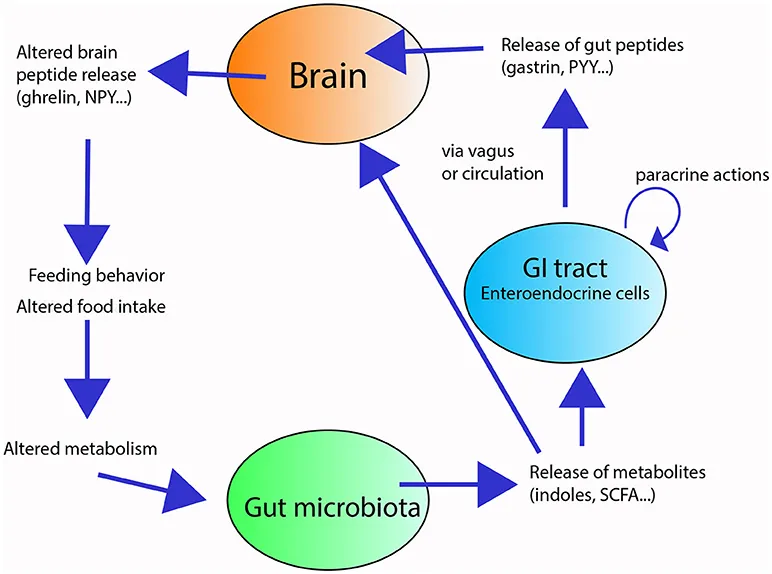
Photo: Robyn Lisa Butt and Helene Volkoff, CC BY-SA 4.0, via Wikimedia Commons
For most of the twentieth century, the relationship between the digestive system and the brain was considered largely one-directional: the brain told the gut what to do. Stress caused stomachaches. Anxiety triggered nausea. The gut, in this framework, was a passive recipient of neural commands issued from above. That model has been overturned with remarkable speed.
Contemporary neuroscience and microbiology have converged on a more radical picture — one in which the gut is not merely responding to the brain but actively shaping it. The community of microorganisms residing in the human gastrointestinal tract, collectively known as the gut microbiome, participates in a continuous, bidirectional dialogue with the central nervous system. The implications of that dialogue extend from everyday mood regulation to the pathophysiology of clinical depression and anxiety disorders.
Anatomy of a Highway: The Gut-Brain Axis
The structural backbone of this communication network is the vagus nerve, the longest cranial nerve in the human body. Running from the brainstem down through the thorax and into the abdomen, the vagus nerve serves as the primary physical conduit between the enteric nervous system — the dense web of roughly 500 million neurons embedded in the gut wall — and the brain.
What makes this anatomy striking is the directionality of the traffic. Approximately 80 to 90 percent of the nerve fibers in the vagus nerve carry signals upward, from gut to brain, rather than the other way around. The enteric nervous system, sometimes called the "second brain," is not simply receiving orders from headquarters; it is sending a constant stream of information upstream, reporting on the chemical and microbial environment of the intestinal lumen in real time.
Beyond the vagus nerve, the gut-brain axis encompasses immunological pathways, the hypothalamic-pituitary-adrenal (HPA) axis governing stress responses, and the systemic circulation through which microbially derived metabolites travel to influence brain function. It is a communication system of considerable complexity, and the microbiome sits at its foundation.
How Bacteria Produce Molecules That Affect the Brain
The gut microbiome influences brain chemistry through several distinct biochemical mechanisms, each of which has been the subject of intensive research over the past two decades.
One of the most significant involves neurotransmitter synthesis. Approximately 90 percent of the body's total serotonin is produced in the gut, not the brain. Enterochromaffin cells lining the intestinal wall synthesize serotonin in response to chemical signals from resident bacteria. While this peripheral serotonin does not directly cross the blood-brain barrier, it plays a critical role in regulating gut motility and feeds back into the vagal signaling pathway that influences mood and anxiety centrally.
Gut bacteria also produce gamma-aminobutyric acid (GABA), the brain's primary inhibitory neurotransmitter, as well as short-chain fatty acids (SCFAs) such as butyrate, propionate, and acetate. SCFAs are generated when gut bacteria ferment dietary fiber, and they exert measurable effects on the brain — including modulation of the blood-brain barrier's permeability, regulation of microglial activity (the brain's resident immune cells), and influence over the HPA axis stress response. Low SCFA production, often a consequence of low-fiber diets common in the United States, has been associated with increased neuroinflammation in preclinical models.
Additionally, the microbiome modulates the immune system in ways that reverberate neurologically. Approximately 70 percent of the body's immune cells reside in or around the gut. Dysbiosis — an imbalance in the microbial community — can trigger low-grade systemic inflammation, elevating circulating cytokines that cross into the brain and disrupt the neurochemical environment associated with stable mood. This inflammatory pathway is now considered a plausible contributing mechanism in a subset of major depressive disorder cases.
Cravings, Appetite, and Microbial Self-Interest
One of the more counterintuitive findings in this field concerns appetite regulation. Emerging research suggests that gut bacteria may actively influence what their host craves, effectively lobbying the brain for the nutrients they require to thrive.
Bacterial species differ in their preferred substrates. Sugar-metabolizing bacteria may promote cravings for refined carbohydrates; fiber-fermenting species may reinforce preferences for plant-based foods. The mechanism appears to involve both vagal signaling and the manipulation of dopaminergic reward pathways — the same circuitry implicated in addiction and compulsive eating behavior.
This does not mean that willpower is an illusion or that dietary choices are entirely determined by microbial populations. But it does suggest that the composition of the microbiome is a physiological variable in appetite regulation that has been almost entirely absent from mainstream nutrition discourse in the United States. The standard American diet — low in fiber, high in ultra-processed foods — may create microbial conditions that perpetuate the very cravings driving further poor dietary choices, establishing a feedback loop with both metabolic and neurological consequences.
Psychobiotics: The Emerging Therapeutic Frontier
The recognition that gut bacteria influence brain function has catalyzed an entirely new area of therapeutic research. Psychobiotics — a term coined by researchers Ted Dinan and John Cryan at University College Cork — refers to live microbial interventions that, when ingested in adequate quantities, produce measurable mental health benefits.
Clinical trials examining probiotic supplementation in populations with depression and anxiety have yielded mixed but increasingly promising results. Strains from the Lactobacillus and Bifidobacterium genera have demonstrated statistically significant reductions in self-reported anxiety and depressive symptoms in several randomized controlled trials, though effect sizes remain modest and the field has not yet produced definitive large-scale evidence. The challenge is significant: the microbiome is extraordinarily individualized, and a strain that produces meaningful benefit in one person may be irrelevant to another.
Prebiotic interventions — dietary strategies that selectively feed beneficial bacterial populations — have also attracted research attention. A diet rich in diverse plant fibers, fermented foods, and polyphenol-containing plants (berries, legumes, leafy greens) consistently supports microbiome diversity in observational studies, and microbiome diversity is generally associated with more favorable mental health outcomes at the population level.
What This Means for Everyday Health Decisions
Translating this science into practical guidance requires some caution. The gut-brain axis is a genuine and well-documented physiological reality, but the field is young enough that many mechanistic details remain under active investigation. Overclaiming — suggesting, for instance, that a specific probiotic supplement will cure depression — misrepresents where the evidence currently stands.
What the research does support, with reasonable confidence, is the following: dietary patterns that promote microbiome diversity are associated with better mental health outcomes; chronic stress disrupts the gut microbiome and, through it, neurological function; and the bidirectional nature of the gut-brain relationship means that both dietary interventions and psychological interventions (such as stress reduction and mindfulness practice) can positively influence the system from either end.
For American adults navigating an environment of chronic stress, ultra-processed food availability, and rising rates of anxiety and depression, the gut-brain axis offers both a more complete physiological explanation for these trends and a set of modifiable targets that extend beyond pharmacology. The bacteria living in your intestines are not passive bystanders to your mental life. They are, quite literally, part of the conversation.