Anticipating the Drought: How the Brain Sets Your Water Budget Before You Feel Dry
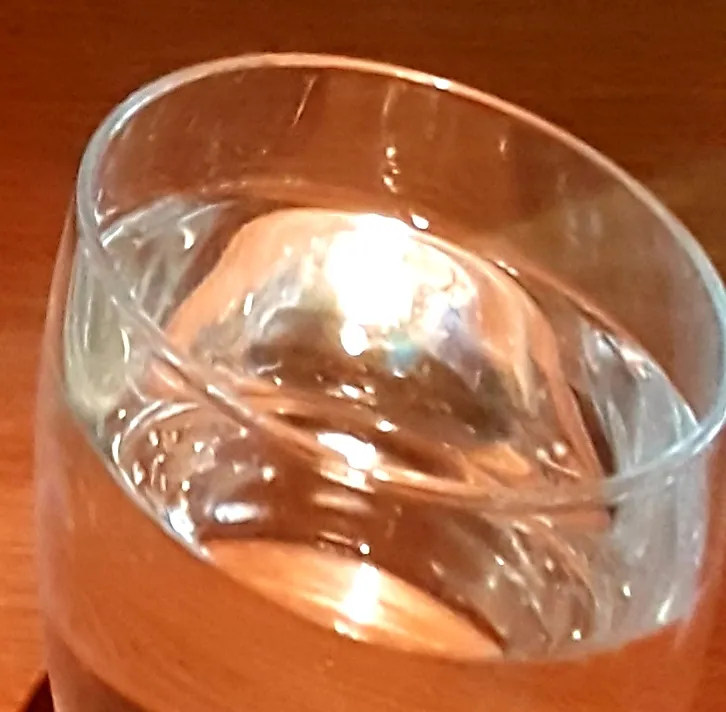
Photo: Mia Gaitanidis, CC BY-SA 4.0, via Wikimedia Commons
Ask most people how thirst works and they will describe a gauge: water runs low, the needle drops, you drink. The physiology is more interesting than that, and considerably stranger. Thirst is generated largely in advance of need, assembled from sensors that monitor blood concentration and blood volume, then blended with memory and routine until the brain produces a conscious urge to drink. It is a prediction, and like most predictions it can be early, late, or wrong.
The problem with waiting for dry
Plasma osmolality in a healthy adult sits around 285 to 295 milliosmoles per kilogram. Thirst typically emerges after a rise of roughly two to three percent. By the time that urge registers, the body has already taken action: vasopressin has risen, the collecting ducts of the kidneys have been ordered to reclaim water, and urine has begun to concentrate.
This sequencing is not inefficiency. A 70-kilogram adult losing a liter of sweat has lost more than one percent of total body water, and cognitive and physical performance begin to slip at roughly that magnitude. A system that waited for obvious dryness before responding would be responding after the deficit had already cost something.
Sensors sitting outside the blood-brain barrier
The primary detectors are a small set of structures in the lamina terminalis, at the front of the third ventricle. The organum vasculosum of the lamina terminalis and the subfornical organ are circumventricular organs, meaning their capillaries are fenestrated and their neurons are exposed to the blood rather than shielded from it by the blood-brain barrier. That exposure is the entire point: these cells can sample plasma composition directly.
Within these regions, neurons respond to hypertonicity through stretch-sensitive channels, including members of the TRPV family, and specialized sodium-sensing channels detect local sodium concentration. The signal is relayed to the median preoptic nucleus, which acts as an integrator. The same circuitry drives both thirst and vasopressin release from the supraoptic and paraventricular nuclei of the hypothalamus—one control loop with two coordinated outputs, one behavioral and one renal.
Two currencies: concentration and volume
Osmolality is only half the accounting. Blood volume is monitored separately, by stretch receptors in the carotid sinus and aortic arch, and by low-pressure receptors in the atria that report on how full the venous side of circulation happens to be. When volume falls, the renin-angiotensin-aldosterone system activates, and angiotensin II acts on the same forebrain circuitry that osmotic signals reach.
The classic demonstrations are unambiguous: an animal that loses blood will drink even when its plasma osmolality is normal or low, because volume signals have overridden concentration signals. The reverse also holds. The brain weighs two inputs measuring different things and resolves them into a single sensation.
Drinking ahead of need
What makes thirst genuinely predictive is learning. Animals given water access only at restricted times begin drinking in anticipation of access, before any measurable deficit exists. In laboratory settings, rats will drink proactively in response to cues that reliably precede a period of water deprivation.
Human behavior follows the same architecture at lower resolution. The water bottle placed beside the desk, the coffee that arrives with the morning routine, the glass filled at the start of a meal—each is a cue that has been paired with drinking often enough that the urge arrives on schedule. Thirst is partly a habit wearing the costume of a physiological signal.
Why relief arrives before rehydration
Anyone who has been truly thirsty knows that the first few swallows help almost immediately. The relief is real, and it is not yet hydration. Receptors in the mouth and throat respond to cooling and wetness; distension of the stomach provides a second signal. Together they produce pre-absorptive satiety—a rapid suppression of thirst and of vasopressin that occurs within minutes, well before the water has been absorbed into the bloodstream and before plasma osmolality has normalized, a process that typically takes fifteen to thirty minutes.
The brain is trusting the act of swallowing as evidence that water is on the way, and adjusting its output accordingly. This is efficient forecasting, and it is also the reason people overshoot.
The cost of a good prediction
Because relief precedes rehydration, it is easy to keep drinking well past need, particularly during endurance events where both thirst and social cues push toward the next cup. Exercise-associated hyponatremia—a dilutional fall in blood sodium—has been documented repeatedly at American marathons and ultramarathons, and it is a hazard of overdrinking rather than underdrinking. The old instruction to drink ahead of thirst captures something real about anticipation, but as a universal rule it has been quietly retired in sports medicine in favor of individualized fluid plans.
When the forecast degrades
Thirst prediction depends on sensors, and sensors age. Older adults show blunted thirst perception and reduced renal concentrating ability, which is one reason heat waves in cities such as Phoenix produce disproportionate harm among the elderly. Diuretics, ACE inhibitors, and lithium all shift the underlying balance. Uncontrolled diabetes produces osmotic diuresis that can outrun any reasonable drinking behavior.
For most healthy adults, the practical guidance remains unremarkable: drink to thirst, watch urine color as a rough index of concentration, and use body weight before and after long exercise to estimate actual losses. The system is not infallible, but it is far more sophisticated than a gauge—an anticipatory controller that uses sodium, saliva, kidney output, and memory to keep a moving budget in balance, and that sometimes hands you the glass before you knew you wanted it.