Calibrated From Within: The Vestibular System's Role in Balance, Cognition, and What Screens Are Quietly Undoing

A Sensory System That Rarely Gets Credit
Most Americans can name the five classical senses without hesitation. The vestibular system is rarely among them. Yet this compact apparatus, housed within the bony labyrinth of the inner ear, functions as one of the body's most consequential sensory organs. It detects gravitational orientation, linear acceleration, and rotational movement in three-dimensional space — information the brain integrates continuously, often without a single moment of conscious awareness.
When the vestibular system is functioning well, it is essentially invisible. When it begins to degrade or malfunction, the consequences range from subtle — a slight unsteadiness when rising from a chair, a moment of disorientation after looking down at a phone — to profoundly disabling. Chronic dizziness is among the most common complaints reported to primary care physicians in the United States, yet its vestibular origins are frequently underappreciated.
This article examines the physiology of this overlooked system, the mechanisms by which modern life is placing it under stress, and what the research suggests about preserving its function.
The Architecture of Equilibrium
The vestibular apparatus consists of two anatomically distinct but functionally integrated components: the otolith organs and the semicircular canals.
The otolith organs — the utricle and the saccule — are responsible for detecting linear acceleration and the static orientation of the head relative to gravity. They achieve this through a specialized structure: a gelatinous membrane embedded with calcium carbonate crystals called otoconia. When the head tilts or the body accelerates linearly, inertia causes these crystals to shift, bending underlying hair cells and generating neural signals that travel via the vestibular branch of cranial nerve VIII to the brainstem.
The semicircular canals, arranged in three orthogonal planes, detect rotational movement. Each canal contains fluid — endolymph — and a sensory region called the ampulla. Rotational motion displaces this fluid, deflecting a gelatinous structure called the cupula and, in turn, stimulating the hair cells beneath it. The three-plane arrangement allows the system to detect rotation in any direction: pitch, roll, and yaw.
Signals from both components converge at the vestibular nuclei in the brainstem, where they are cross-referenced against input from the visual system, proprioceptors in muscles and joints, and higher cortical regions. The result is a continuously updated model of the body's position and motion in space.
Beyond Balance: The Cognitive Dimension
For decades, the vestibular system was understood primarily in terms of postural control and gaze stabilization. More recent research has substantially broadened that picture.
The vestibular nuclei maintain extensive projections into the thalamus, hippocampus, and parietal cortex — brain regions associated with spatial memory, attention, and navigational cognition. Studies using vestibular stimulation have demonstrated measurable effects on spatial working memory and the activity of hippocampal place cells, which are neurons that encode an organism's location within an environment.
Clinical observations reinforce this connection. Patients with chronic vestibular disorders frequently report difficulties with concentration, memory retrieval, and spatial reasoning that cannot be attributed solely to the distress of managing their symptoms. Some researchers have proposed that vestibular input may function as a kind of rhythmic scaffold for broader cognitive processing — a hypothesis that remains under active investigation but is gaining empirical support.
The vestibulo-ocular reflex, which stabilizes gaze during head movement, is another dimension of the system's reach. When this reflex is impaired, reading, screen use, and visual tracking all become effortful, contributing to fatigue and attentional strain that can be mistaken for other conditions entirely.
How Modern Life Is Degrading the System
The vestibular system, like many sensory systems, depends on stimulation for maintenance. It is calibrated through use — through movement, varied terrain, head rotation, and the environmental complexity that human bodies navigated throughout most of evolutionary history.
Contemporary American life provides comparatively little of this. The average adult spends the majority of waking hours seated, moving through environments that are flat, predictable, and visually dominated by near-field screens. Head movement is reduced. Gaze is fixed at a constant focal distance. The postural demands on the vestibular system are minimal and repetitive.
Smartphone use introduces a specific complication. The posture associated with device use — head flexed forward, gaze angled downward — places the otolith organs in a position that deviates from neutral alignment for extended periods. More significantly, the visual environment presented by a screen is static relative to the viewer, even as the viewer's body may shift slightly. This creates low-level sensory conflict between visual input, which suggests stillness, and vestibular input, which registers postural sway. Over time, the brain may recalibrate toward visual dominance, reducing its reliance on vestibular signals — a process sometimes described as visual dependency.
Reduced environmental complexity compounds the problem. Walking on flat, uniform surfaces provides far less vestibular and proprioceptive challenge than varied terrain. The neural pathways supporting multi-sensory integration — the coordination between vestibular, visual, and somatosensory input — require ongoing challenge to remain efficient. Without it, they become less precise.
Aging accelerates these changes. Otoconia can degenerate or become dislodged — the underlying mechanism in benign paroxysmal positional vertigo, one of the most prevalent vestibular disorders in older adults. Hair cell populations within the labyrinth decline with age, and the speed of central processing decreases. Sedentary behavior appears to hasten these changes by reducing the compensatory neural activity that would otherwise maintain functional capacity.
Restoring Vestibular Competence
The encouraging physiological reality is that the vestibular system retains meaningful plasticity throughout adulthood. Rehabilitation strategies developed for clinical vestibular disorders have demonstrated that targeted movement challenges can drive central compensation — the brain's capacity to reweight and reintegrate sensory signals.
Gaze stabilization exercises, which involve maintaining visual focus on a stationary target while moving the head through controlled rotations, are among the most evidence-supported interventions for improving vestibular function. They directly train the vestibulo-ocular reflex and encourage the brain to rely more heavily on vestibular input rather than defaulting to visual cues.
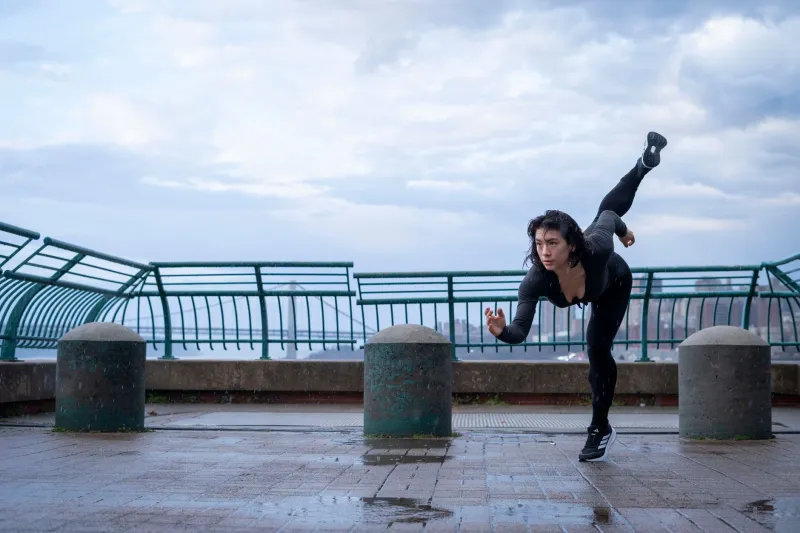
Balance training on unstable surfaces — foam pads, balance boards, or simply uneven outdoor terrain — introduces the kind of multi-sensory challenge that flat, indoor environments eliminate. Activities that combine head movement with locomotion, such as hiking on varied trails, dancing, or certain martial arts disciplines, provide particularly rich vestibular stimulation.
Reducing prolonged static screen time — or at minimum, incorporating regular breaks that involve head movement and distance gaze — allows the vestibular-visual mismatch to resolve and prevents the gradual entrenchment of visual dependency.
For individuals experiencing persistent dizziness, imbalance, or unexplained spatial disorientation, evaluation by a vestibular specialist or a physical therapist trained in vestibular rehabilitation is advisable. Many such conditions respond well to targeted intervention when identified correctly.
A System Worth Knowing
The vestibular system does not announce itself. It performs its work silently, integrating information from the inner ear with signals from the eyes and body to keep a person upright, oriented, and spatially coherent in a complex world. That invisibility, paradoxically, may be why it receives so little attention — until something goes wrong.
Understanding its physiology, its vulnerability to modern behavioral patterns, and the practical measures available to protect it is not merely an academic exercise. It is an investment in the sensory infrastructure that underlies movement, cognition, and the basic capacity to navigate daily life with stability and confidence.