Adenosine, Cortisol, and the Clock: The Real Physiology Behind Your Afternoon Coffee Dependency
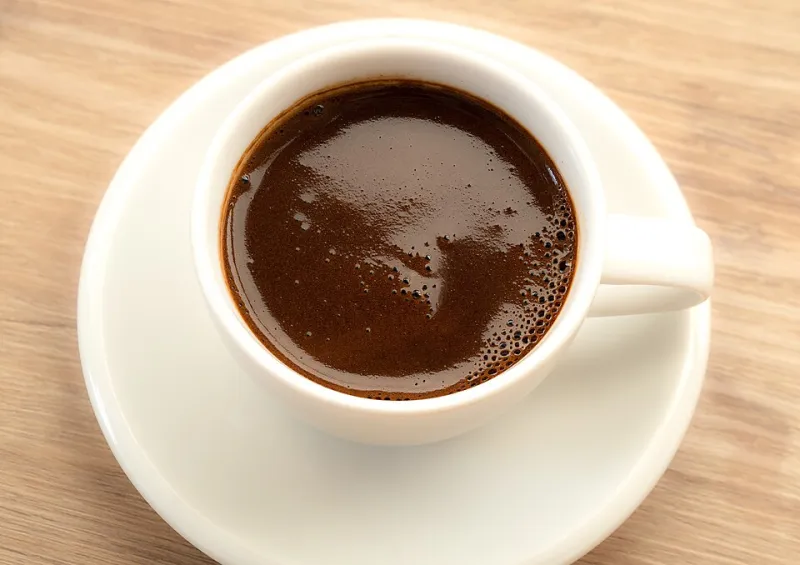
Photo: Petar Milošević, CC BY-SA 4.0, via Wikimedia Commons
The Molecule You Depend On More Than You Realize
For millions of Americans, the morning cup of coffee is less a preference than a biological necessity. Yet despite caffeine's status as the most widely consumed psychoactive substance in the world, few people understand precisely what it does inside the body — and fewer still understand why its effects so reliably collapse by mid-afternoon, often leaving the habitual drinker worse off than before the first sip.
The answer lies not in willpower or sleep hygiene alone, but in a sophisticated interplay between receptor dynamics, enzyme genetics, hormonal rhythms, and the brain's own fatigue-signaling architecture.
How Caffeine Actually Works: The Adenosine Story
To understand the crash, one must first understand the mechanism. Caffeine does not generate energy. It borrows it.
Throughout the waking day, neurons in the brain produce a byproduct of metabolic activity called adenosine. This molecule accumulates progressively, binding to adenosine receptors — particularly the A1 and A2A subtypes — and gradually signaling the brain to downregulate arousal, reduce dopamine transmission, and prepare the body for sleep. The longer you are awake, the more adenosine builds, and the stronger the pressure toward sleep becomes. This is known as sleep pressure, or Process S in the two-process model of sleep regulation.
Caffeine is structurally similar enough to adenosine that it competes for the same receptor binding sites. It does not destroy adenosine or stop its production; it simply occupies the receptors, temporarily preventing adenosine from delivering its fatigue signal. The brain perceives alertness not because energy has been added, but because the signal for tiredness has been blocked.
This distinction matters enormously. While caffeine holds those receptors, adenosine continues to accumulate in the bloodstream. The moment caffeine is metabolized and its receptor blockade lifts — typically four to six hours after consumption — that stored adenosine floods back to the now-unoccupied receptors all at once. The result is not a gradual return to baseline fatigue; it is a sudden, amplified wave of it.
The Half-Life Problem and Genetic Variation
Caffeine is metabolized primarily in the liver by the cytochrome P450 enzyme CYP1A2. In most individuals, the half-life of caffeine — the time required to eliminate half the ingested dose — ranges from three to five hours under typical conditions. However, this figure varies dramatically based on genetic polymorphisms in the CYP1A2 gene.
Individuals carrying the 1F allele variant are classified as fast metabolizers. They process caffeine rapidly and tend to experience shorter-duration effects with a relatively clean energy curve. Those carrying the 1A allele are slow metabolizers, meaning caffeine lingers in their system considerably longer — sometimes exceeding eight hours. For this group, an afternoon cup of coffee does not merely delay the crash; it extends caffeine's interference with adenosine receptors well into the evening, disrupting sleep architecture even when the individual feels subjectively fine.
Estimates suggest that roughly 50 percent of the US population carries at least one copy of the slow-metabolizer variant, though most remain unaware of it. This genetic variable helps explain why two people with identical caffeine habits can have profoundly different experiences with afternoon energy and sleep quality.
Cortisol Timing and the Circadian Collision
A second, frequently overlooked dimension of the caffeine crash involves the body's natural cortisol rhythm. Cortisol — commonly associated with stress, but fundamentally a hormone of arousal and metabolic activation — follows a predictable diurnal pattern governed by the suprachiasmatic nucleus, the brain's master circadian clock.
Cortisol peaks sharply in the first 30 to 45 minutes after waking, a phenomenon known as the cortisol awakening response. It then declines through the morning, reaches a secondary, smaller peak around noon, and falls to its lowest daytime levels between approximately 2:00 and 4:00 PM — which is, not coincidentally, precisely when most Americans report their sharpest energy decline.
Consuming caffeine during the morning cortisol peak is physiologically redundant. The body is already operating at its highest natural arousal state, meaning caffeine's adenosine-blocking contribution adds relatively little to alertness while still driving receptor occupancy and delaying adenosine clearance. Research suggests that regular consumption during high-cortisol windows accelerates tolerance development, because the brain compensates for consistent receptor blockade by synthesizing additional adenosine receptors — a process called upregulation.
More adenosine receptors mean that when caffeine eventually clears, adenosine has even more binding sites to activate simultaneously. The afternoon crash, in this context, is not incidental. It is a predictable consequence of receptor upregulation driven by poorly timed caffeine use.
Tolerance, Dependence, and the Diminishing Return
Habitual caffeine consumers frequently report that coffee no longer makes them feel good — it merely prevents them from feeling bad. This shift represents the transition from pharmacological effect to physiological dependence, and it has a clear neurochemical basis.
As adenosine receptor upregulation progresses, the brain requires caffeine simply to achieve a baseline state of normal functioning. Without it, the surplus of receptors allows adenosine to produce fatigue disproportionate to actual sleep pressure. This is the withdrawal headache, the morning grogginess, the inability to concentrate before the first cup — all symptoms of adenosine activity at a receptor density the brain would never have developed without chronic caffeine exposure.
Tolerance also blunts the dopaminergic benefits of caffeine. Early in caffeine use, receptor blockade indirectly enhances dopamine signaling in the nucleus accumbens, contributing to improved mood and motivation. Over time, this effect diminishes substantially, leaving many habitual users consuming caffeine primarily to stave off withdrawal rather than to gain any meaningful cognitive or physical benefit.
Recalibrating Your Caffeine Strategy
The research does not suggest eliminating caffeine — its genuine benefits, when used strategically, are well-documented. What it does support is a significant restructuring of when and how caffeine is consumed.
Delaying the first caffeine intake until 90 to 120 minutes after waking allows the cortisol awakening response to complete its natural arc, reducing tolerance development and preserving caffeine's effectiveness for when cortisol begins to decline. Targeting caffeine consumption to the late morning window — roughly 9:30 to 11:30 AM for individuals who wake between 6:00 and 7:00 AM — aligns stimulation with falling cortisol levels and positions the half-life clearance well before the evening sleep window.
A secondary, carefully timed dose before the early afternoon cortisol trough can blunt the 2-to-4 PM dip without extending receptor blockade into the night, provided consumption ends by early afternoon for average metabolizers, or earlier for those with the slow-metabolizer genotype.
Periodic caffeine abstinence — even a single rest day per week — can partially reverse receptor upregulation, restoring sensitivity and reducing the baseline dose required for effect.
The Body Knows When It Wants to Rest
The afternoon energy dip is not a flaw in human physiology. It is an ancient, well-conserved signal with deep roots in circadian biology — one that some researchers believe reflects a vestigial biphasic sleep pattern still encoded in human neurology. Coffee does not eliminate this signal. Used carelessly, it merely postpones and amplifies it.
Understanding the pharmacokinetics of caffeine, the architecture of adenosine signaling, and the hormonal landscape of the circadian day offers something more valuable than another cup: a framework for working with the body's biology rather than perpetually against it.