Neither Sitting Nor Standing: The Biomechanical Truth About Static Posture and What Your Body Actually Demands
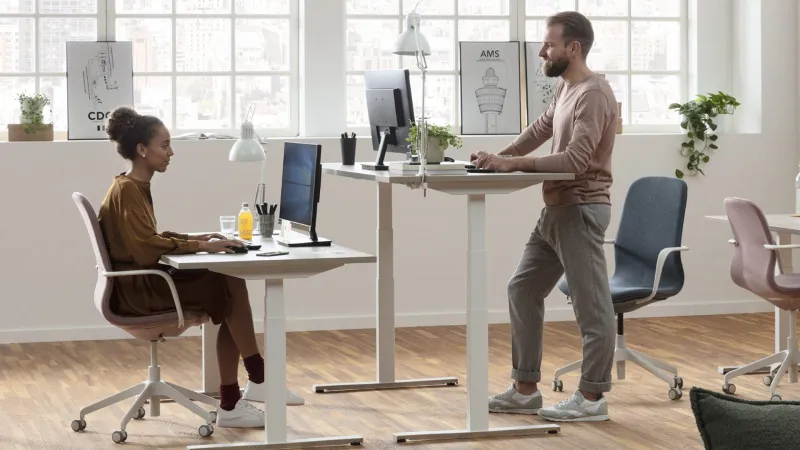
Photo: person alternating sitting standing at adjustable desk in modern office, via lofofficefurniture.co.uk
Over the past decade, the phrase "sitting is the new smoking" has worked its way into American workplace culture with remarkable staying power. Standing desks became status symbols in open-plan offices from San Francisco to New York, sold on the promise that simply getting off your chair would reverse the damage of a sedentary workday. The physiology, however, does not support such a clean narrative. Standing for prolonged periods introduces its own set of biological consequences — ones that are poorly understood by most workers who made the switch in good faith.
The real issue, it turns out, is not the position itself. It is immobility.
What Happens to the Body During Prolonged Standing
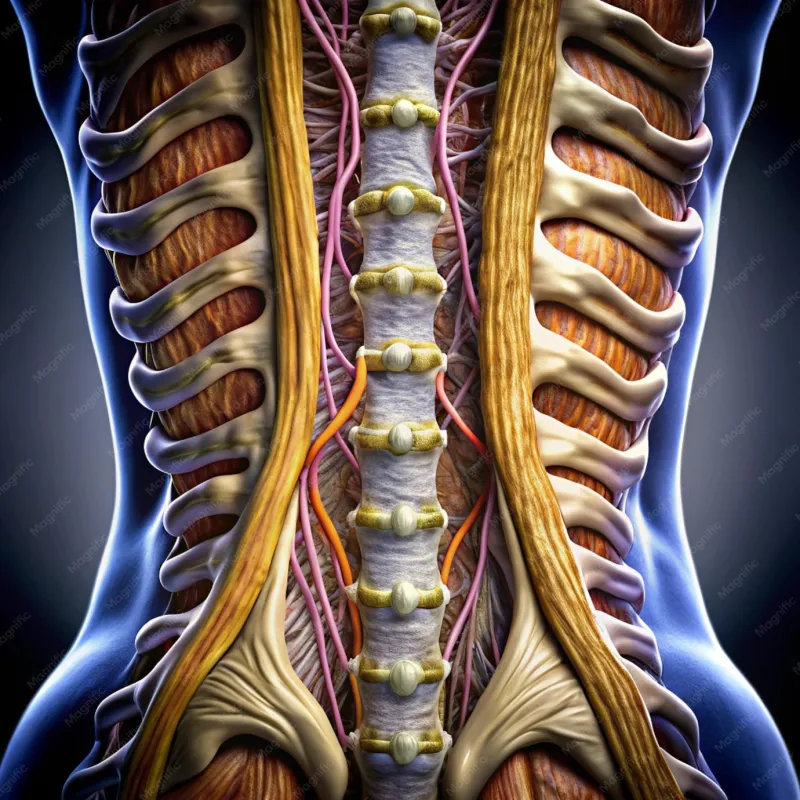
When a person stands motionless for extended periods, the musculoskeletal system is placed under a form of sustained, low-grade mechanical stress that differs meaningfully from the stress of dynamic movement. Gravity acts continuously on the vertebral column, compressing intervertebral discs without the rhythmic loading and unloading cycle that walking or shifting weight provides. This compression is not catastrophic in isolation, but over hours it contributes to disc dehydration — a process in which the nucleus pulposus, the gel-like core of each spinal disc, gradually loses fluid and becomes less effective as a shock absorber.
The lumbar spine is particularly vulnerable. In static standing, the natural lordotic curve of the lower back is often exaggerated as the pelvis tilts anteriorly, placing sustained tension on the posterior ligaments and facet joints. Postural muscles — specifically the erector spinae group and the deep stabilizers of the lumbar region — must fire continuously rather than in the alternating bursts they are designed for. Sustained isometric contraction reduces local blood flow to these muscles, accelerating the accumulation of metabolic byproducts such as lactate and contributing to the familiar ache that develops in the low back after a long shift on your feet.
The Feet, Knees, and the Vascular Consequences Below the Waist
The lower extremities bear a disproportionate share of the burden during prolonged standing. The plantar fascia — the thick band of connective tissue spanning the arch of the foot — is subjected to continuous tensile load. Over time, this contributes not only to localized foot fatigue but also to the development or worsening of plantar fasciitis, one of the most common musculoskeletal complaints among workers in standing occupations such as retail, food service, and manufacturing.
At the knee, the story is similarly unfavorable. Static standing with even minor valgus or varus alignment — inward or outward deviation of the knee joint — concentrates compressive forces unevenly across the articular cartilage. Because cartilage has no direct blood supply and depends on the mechanical pumping action of movement to circulate synovial fluid, immobility effectively starves the tissue of the nutrients it needs to maintain itself.
Perhaps the most underappreciated consequence of prolonged standing is its cardiovascular toll. Venous return — the movement of deoxygenated blood back toward the heart — depends heavily on the skeletal muscle pump, particularly the calf muscles. When the legs are stationary, this pump is largely inactive. Blood pools in the lower limbs, increasing hydrostatic pressure in the veins and promoting fluid filtration into surrounding tissues. The result is the swelling, heaviness, and fatigue in the legs that many workers notice by the end of a long shift. Over years, this pattern is associated with an elevated risk of chronic venous insufficiency and varicose veins.
The Postural Muscle Fatigue Cycle
Understanding why any static posture eventually becomes harmful requires a closer look at how postural muscles function. These muscles — including the deep spinal stabilizers, the hip abductors, and the intrinsic muscles of the foot — are predominantly composed of slow-twitch, Type I muscle fibers. They are built for endurance, not power. Under normal conditions, they operate in a coordinated, alternating pattern, allowing some fibers to rest while others contract.
Static posture disrupts this rotation. When the body is locked in one position, the same motor units fire repeatedly without adequate recovery time. Electromyographic studies have demonstrated that sustained low-level muscle activation, particularly in the trapezius and lumbar erectors, is associated with a specific form of fatigue that involves a progressive loss of motor unit recruitment efficiency. Essentially, the muscles work harder and harder to maintain the same postural output, and they do so with progressively less blood flow to assist them.
This fatigue cycle does not discriminate between sitting and standing. Both positions, held statically for long enough, drive the same underlying physiological deterioration.
Why the Comparison to Sitting Still Matters
Research published over the past several years has complicated the standing-desk narrative considerably. A 2017 study published in Ergonomics found that prolonged standing was associated with increased discomfort, fatigue, and lower limb swelling at rates comparable to — and in some measures exceeding — those associated with prolonged sitting. A subsequent analysis of occupational health data from industries with high rates of standing work found elevated rates of musculoskeletal disorders and varicose veins, suggesting that the cardiovascular and structural risks of static standing are not trivial.
This does not mean that sitting is preferable. It means that the framing of the debate as sitting versus standing fundamentally misses the point.
Dynamic Movement as the Physiological Imperative
What the body requires is not a better static position — it is movement. The intervertebral discs rehydrate through cyclic loading. Synovial fluid circulates through cartilage via joint motion. The venous pump activates with calf muscle contraction. Postural muscles recover through alternating periods of activation and rest. None of these processes occur adequately in a body that is standing still any more than in one that is seated all day.
The emerging consensus in occupational physiology points toward frequent postural transitions and low-intensity movement as the most effective intervention. This means alternating between sitting and standing, incorporating brief walking breaks every 30 to 45 minutes, and engaging in deliberate micro-movements — weight shifts, calf raises, gentle spinal rotations — throughout the workday. Anti-fatigue mats can reduce some of the compressive load on the feet and lower limbs for those who must stand for extended periods, but they do not address the fundamental problem of immobility.
For those with access to treadmill desks or under-desk cycling devices, the research is cautiously optimistic, particularly for tasks that do not require fine motor precision. Even slow ambulation — walking at one mile per hour — is sufficient to activate the skeletal muscle pump, reduce spinal compression, and interrupt the postural fatigue cycle.
The Takeaway for the American Workplace
The standing desk industry generated over one billion dollars in revenue in the United States in recent years, driven largely by legitimate concern about sedentary behavior. That concern is warranted. But the solution it produced — replacing one static posture with another — reflects a superficial understanding of what human physiology actually requires.
The spine, the joints, and the cardiovascular system were not designed for stillness in any configuration. They were designed for the varied, continuous movement that defined human existence for most of evolutionary history. Recreating even a fraction of that movement within the constraints of a modern office environment is not merely a wellness preference. It is a physiological necessity.