Red Faces and Rapid Pulses: The Organ-by-Organ Physiology of Alcohol Metabolism
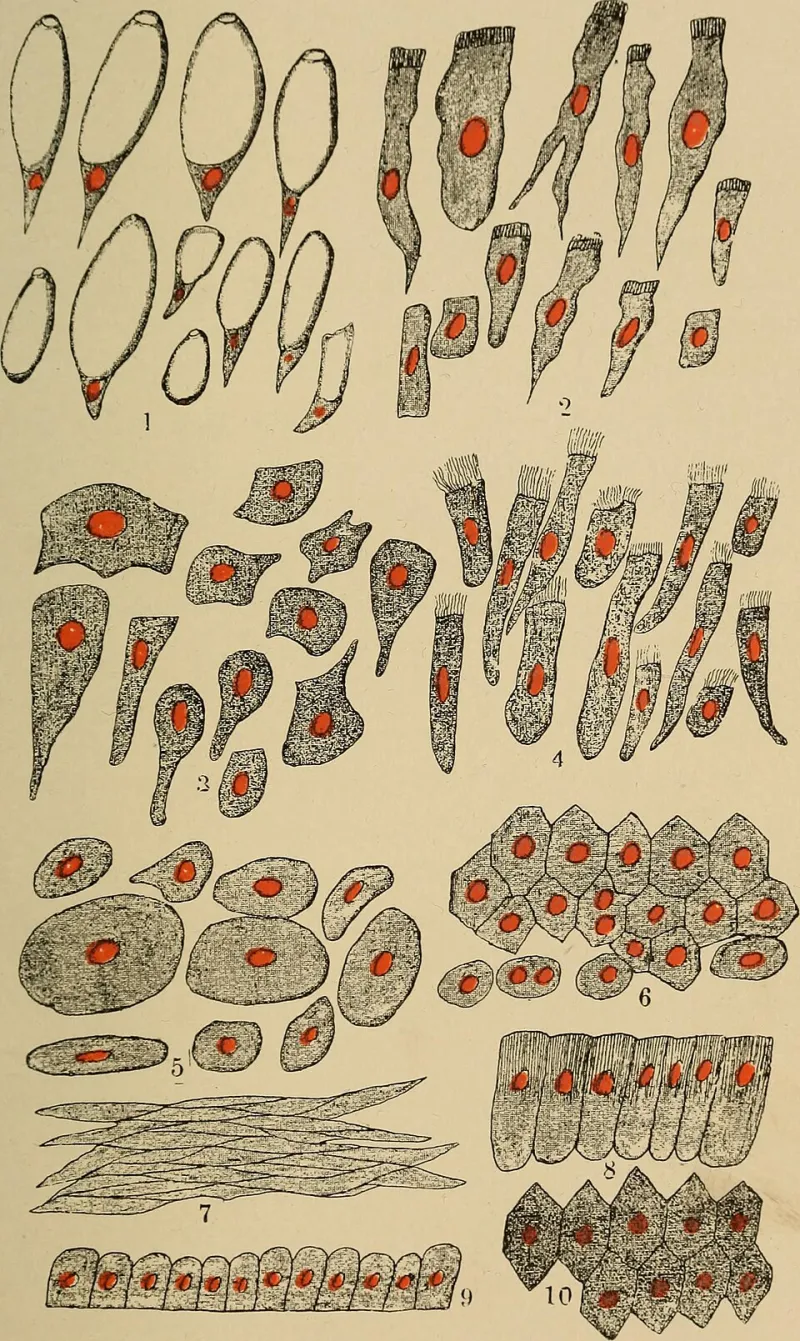
Photo: Stowell, Charles H[enry], 1850- [from old catalog], No restrictions, via Wikimedia Commons
For some people, a single glass of wine at a dinner party is enough to produce a vivid scarlet flush across the cheeks and neck. For others, several drinks produce no visible change in complexion whatsoever. These divergent responses are not simply matters of tolerance or habit—they are rooted in precise genetic differences, enzymatic pathways, and vascular mechanisms that vary considerably from one person to the next. To understand why alcohol affects the body so differently, it helps to follow ethanol's journey from the moment it enters the digestive tract to the point at which it is broken down, distributed through the bloodstream, and ultimately cleared from the body.
First Contact: What Happens in the Stomach
Alcohol does not wait for formal digestion before beginning to act on the body. Roughly 20 percent of ingested ethanol is absorbed directly through the stomach wall, with the remaining 80 percent absorbed in the small intestine. The rate of this absorption depends heavily on several variables: whether food is present, the concentration of the beverage, and the individual's gastric motility at the time of consumption.
Food slows gastric emptying, which in turn delays the transit of ethanol into the small intestine and reduces the peak blood alcohol concentration that results from any given amount of drink. This is why drinking on an empty stomach produces a faster and more pronounced physiological response. Carbonated beverages, such as sparkling wine or mixed drinks with soda, tend to accelerate gastric emptying and can increase the speed of absorption—a detail that helps explain the anecdotal observation that champagne "hits faster."
The stomach itself contains a modest amount of alcohol dehydrogenase (ADH), the enzyme responsible for initiating ethanol oxidation. In some individuals, this gastric ADH activity provides a limited first-pass metabolism that reduces the amount of ethanol reaching the bloodstream. However, this gastric contribution is minor compared to what the liver handles, and it varies considerably by sex—research has consistently shown lower gastric ADH activity in women, which contributes to higher blood alcohol concentrations per unit of ethanol consumed relative to men of comparable body weight.
The Liver's Central Role: Enzymes, Intermediates, and Genetic Variation
Once ethanol enters the portal circulation, it travels directly to the liver—the primary site of alcohol metabolism. Here, alcohol dehydrogenase converts ethanol into acetaldehyde, a highly reactive and toxic intermediate compound. Acetaldehyde is subsequently processed by a second enzyme, aldehyde dehydrogenase 2 (ALDH2), which converts it into acetate. Acetate is comparatively benign and is eventually broken down into carbon dioxide and water in peripheral tissues.
The efficiency of this two-step process is where individual variation becomes critically important. Genetic polymorphisms—particularly in the genes encoding ADH1B and ALDH2—determine how quickly each step occurs. The ADH1B*2 variant, prevalent among individuals of East Asian descent, produces an enzyme that converts ethanol to acetaldehyde at a substantially accelerated rate. When this rapid conversion is paired with a less active form of ALDH2 (the ALDH2*2 allele, also more common in East Asian populations), acetaldehyde accumulates in the bloodstream before it can be adequately cleared.
This acetaldehyde accumulation is the direct biochemical cause of what is commonly called "Asian flush" or alcohol flush reaction—though the phenomenon is not exclusive to any single ethnic group and occurs on a spectrum across diverse populations. Acetaldehyde triggers mast cell degranulation and the release of histamine, which causes peripheral vasodilation, particularly in the capillaries of the face, neck, and upper chest. The result is a visible redness that can appear within minutes of alcohol consumption.
Vascular Responses: Why Blood Vessels Dilate and What That Costs the Body
Ethanol itself is a vasodilator independent of acetaldehyde. It acts on smooth muscle cells lining blood vessel walls, reducing vascular tone and allowing vessels to widen. This peripheral vasodilation produces a sensation of warmth—one of the most recognizable subjective effects of alcohol—but it comes with a physiological cost that is frequently misunderstood.
When blood vessels near the skin surface dilate, warm blood from the body's core is redirected toward the periphery. The skin radiates this heat to the environment, which actually accelerates the loss of core body temperature. This is why alcohol consumption in cold environments is genuinely dangerous: the perceived warmth is a physiological illusion masking a net decline in core temperature. The body's thermoregulatory mechanisms, which depend on vasoconstriction to conserve heat, are effectively overridden by ethanol's vasodilatory action.
The cardiovascular system faces additional demands during alcohol metabolism. Heart rate typically increases following ethanol consumption, driven by a combination of sympathetic nervous system activation and the hemodynamic effects of vasodilation. Blood pressure initially drops as peripheral resistance decreases, but this effect reverses over time. Chronic and heavy alcohol consumption is associated with sustained hypertension, a consequence of repeated cycles of neurohormonal activation—including elevated cortisol and catecholamine levels—that the body employs to compensate for alcohol-induced vasodilation.
Acetaldehyde Beyond the Flush: Systemic Consequences
The physiological significance of acetaldehyde extends well beyond facial redness. This intermediate compound is classified as a Group 1 carcinogen by the International Agency for Research on Cancer. It forms adducts with proteins and DNA, interferes with cellular repair mechanisms, and disrupts mitochondrial function. Individuals who carry the ALDH2*2 variant and continue to drink despite experiencing flush reactions face a disproportionately elevated risk of esophageal cancer relative to those who metabolize acetaldehyde efficiently—a risk that compounds significantly with tobacco use.
Acetaldehyde also contributes to the symptomatic experience of hangovers. While dehydration and electrolyte imbalance play well-documented roles in post-drinking discomfort, circulating acetaldehyde is responsible for many of the inflammatory symptoms—nausea, headache, and malaise—that persist even after blood alcohol concentration has returned to zero.
Alcohol and Blood Pressure Regulation Over Hours
The relationship between alcohol and blood pressure is not static across a drinking episode. In the first hour or two following consumption, vasodilation tends to lower blood pressure modestly. As metabolism proceeds and ethanol clearance occurs, a rebound phenomenon can emerge: blood pressure rises above pre-drinking baseline as the body overcorrects through sympathetic activation. This oscillation is more pronounced in individuals who drink heavily or frequently, and it contributes to the well-established link between regular alcohol use and long-term cardiovascular risk.
The kidneys also respond to alcohol's presence. Ethanol suppresses antidiuretic hormone (ADH, also known as vasopressin) secretion from the posterior pituitary, which reduces the kidney's ability to reabsorb water and leads to increased urine output. This diuretic effect accelerates dehydration and contributes to the electrolyte shifts—particularly in sodium and potassium—that affect both cardiovascular and muscular function in the hours following drinking.
What the Flush Actually Tells You
For many Americans who experience the alcohol flush reaction, the visible redness is dismissed as a cosmetic inconvenience or treated as a badge of low tolerance. The physiology tells a more instructive story. Flushing is a biomarker of acetaldehyde accumulation—a signal that the body's enzymatic machinery is struggling to clear a toxic intermediate before it causes cellular stress. Far from being trivial, the flush response reflects a metabolic bottleneck with measurable implications for long-term health.
Understanding the organ-level cascade that alcohol initiates—from stomach absorption and hepatic enzymatic processing to vascular dilation and thermoregulatory disruption—provides a clearer picture of why no two people experience drinking quite the same way. Genetics, enzyme expression, sex, body composition, and nutritional status all intersect to shape a response that is far more complex than the simple measurement of how many drinks someone can handle.