Wide Open and Overlooked: The Cooling Case for the Common Yawn

Photo: Mihály Zichy, Public domain, via Wikimedia Commons
Somewhere in the third row of a conference room, one person yawns. Within twenty seconds, half the room has followed. Nothing has been said, nobody is bored enough to admit it, and yet a motor program older than mammals has just propagated through the audience like a rumor. The common explanation — stale air, low oxygen, tired brains gasping for fuel — has been tested repeatedly and has failed every test. What has survived the testing is stranger and more interesting: the yawn appears to be part of how the brain manages its own temperature, and possibly how it manages its own vigilance.
The Oxygen Story Collapsed Decades Ago
The respiratory account of yawning is intuitive and wrong. In a series of experiments summarized by Robert Provine and colleagues in 1987, volunteers who breathed air enriched with carbon dioxide — a reliable way to lower blood oxygen and drive the urge to breathe — did not yawn more often. Exercise did not increase yawning. Neither did sitting in a warm, stuffy room. And the movement itself is a poor tool for gas exchange: the extra volume drawn in during a yawn is only a few times a normal tidal breath, and a voluntary deep breath delivers the same air without the jaw-cracking theatrics.
If oxygen were the point, a sigh would do. The yawn recruits a far larger program: the mouth opens wide, the jaw and facial muscles contract, the eyes often close, tears well, and in the full version the arms and trunk stretch. It lasts four to seven seconds. That is a great deal of physiology for a breath.
A Motor Program With a Chemical Signature
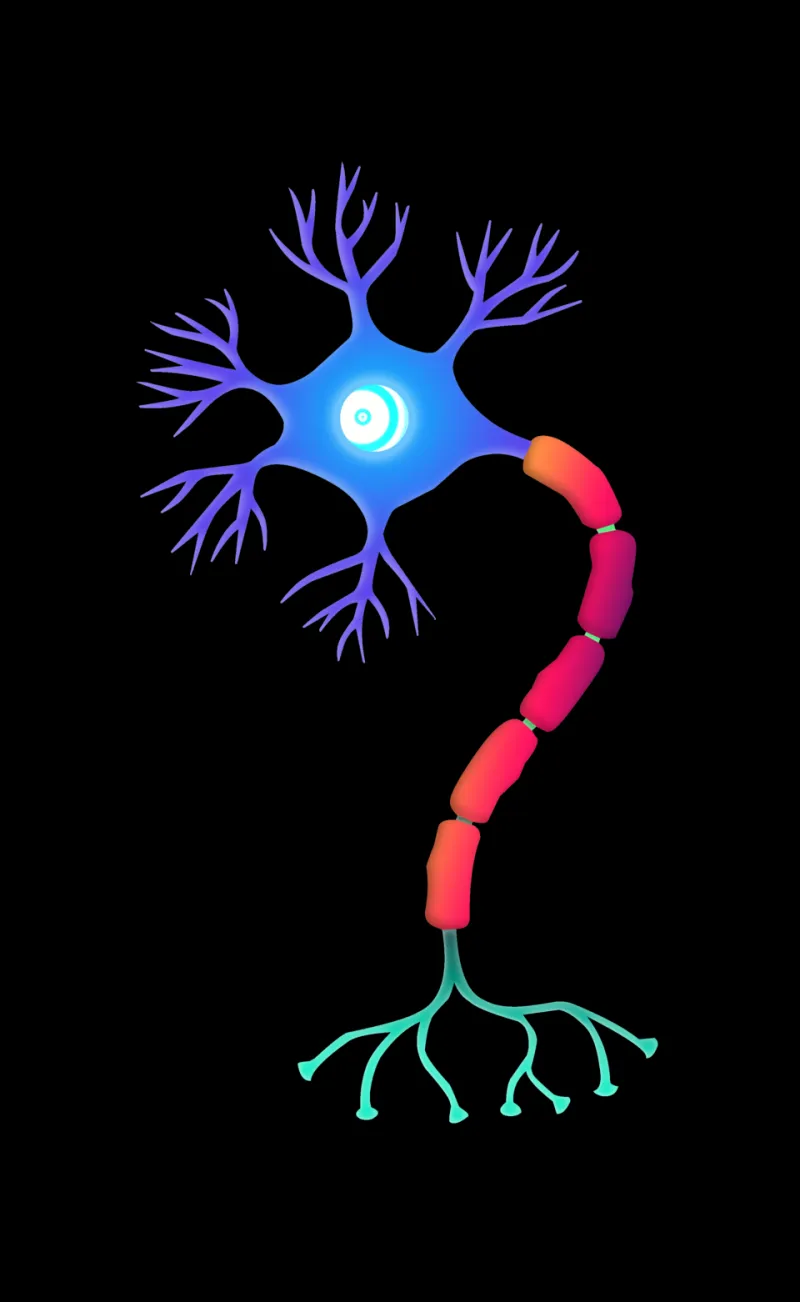
The yawn is generated in the brainstem, with the paraventricular nucleus of the hypothalamus acting as a key node and the hippocampus and reticular formation feeding into it. From there, signals descend to the motor nuclei controlling the jaw, face, and diaphragm. The pharmacology is revealing. Drugs acting on dopamine, serotonin, oxytocin, and the melanocortin system can trigger or suppress yawning, and opioids notoriously produce yawns as a side effect. This is not a spinal reflex arc. It is a coordinated, whole-body event with a chemical switchboard behind it.
The Cooling Hypothesis
In 2007, Andrew Gallup and Gordon Gallup Jr. proposed that the yawn functions as a thermoregulatory mechanism. The reasoning runs as follows. Mental effort, sleep transitions, and sustained attention all raise brain temperature modestly. A yawn combines three cooling maneuvers: a wide gape that increases blood flow through the face and scalp, a deep inhalation that draws ambient air across the nasal and oral mucosa, and a stretch of the neck and shoulders that mobilizes muscle and venous return. Cooled venous blood draining the face can reach the brain through emissary veins and the cavernous sinus — a countercurrent arrangement that lets the surface of the head influence the temperature of what lies beneath it.
The supporting evidence is indirect but consistent. Yawn frequency rises as ambient temperature climbs, then falls again once the air is hotter than the body — exactly the pattern expected if the yawn is trying to dump heat into the environment but cannot do so when the environment is warmer than the brain. Small experiments have found that cooling the forehead, or breathing through the nose rather than the mouth, reduces contagious yawning, while warming the forehead does the reverse. Direct measurement of human brain temperature during a yawn remains technically difficult, which is why this is still a hypothesis rather than a settled fact.
Why You Cannot Simply Stop
Anyone who has tried to stifle a yawn knows the peculiar arithmetic involved: the harder you suppress it, the more insistently it returns. Part of the explanation is mechanical. The yawn is a stereotyped sequence with a beginning, a peak, and a resolution; interrupting it mid-course leaves the pattern incomplete, and the brain appears to register the incompletion as a reason to try again. Part of the explanation is attentional. Monitoring yourself for the urge to yawn makes the urge more salient.
There is a social tax as well. A suppressed yawn is often more conspicuous than an open one — the clenched jaw, the watering eyes, the odd swallowed breath. The polite version costs more effort and delivers less cooling.
Contagion as a Feature, Not a Bug
Contagious yawning emerges in humans around age four or five and has been documented in chimpanzees and, more controversially, in dogs. It correlates modestly with measures of empathy and is reduced in some clinical populations, though the mirror-neuron explanation that once dominated popular accounts has been substantially walked back. A more economical reading is that contagious yawning rides on ordinary social attention: humans are built to notice and echo the state changes of those around them, and a yawn is a highly visible state change.
That framing explains why yawns cluster at the boundaries of the day — on waking, before sleep, during long meetings, before a performance — and why they spread most readily between people who are paying attention to one another. The yawn may be a small broadcast: a signal that vigilance is shifting, paired with a mechanism that helps the brain make the shift.
When Yawning Deserves a Second Look
Ordinary yawning needs no investigation. Frequent, uncontrollable yawning is a different matter. It can accompany sleep deprivation, medication effects — notably SSRIs, dopamine agonists, and opioids — and, rarely, neurological conditions affecting the brainstem. Persistent yawning alongside other new symptoms warrants a medical conversation rather than a diagnosis from a search engine.
For everyone else, the takeaway is modest and slightly humbling. The yawn is not a sign of rudeness or a failure of oxygenation. It is a small, ancient, whole-body maneuver that appears to help the brain regulate its temperature and its state of alertness — and it is one of the few such maneuvers you can watch happening in another person and then feel happening, unbidden, in yourself.